- Home
- About
- Services
- Resources
- Do You Need a Permit to Remove a Tree in Manatee County
- Do You Need a Permit to Remove a Tree in Sarasota County
- Bradenton City Tree Removal Permits
- Florida Tree Removal Law 163.045
- What Tree Removal Costs in Manatee and Sarasota County
- Palm Tree Trimming Cost in Bradenton, Florida Guide
- Bradenton Hurricane Tree Prep
- Tree Topping in Florida
- Is Your Tree Dangerous? Warning Signs in Bradenton, Florida
- Live Oaks in Manatee County: Protected, Pruned and Misunders
- Florida Palm Tree Care | Sabal, Queen, Coconut and Date
- Storm Damage Tree Removal and Insurance in Bradenton
- Signs of Tree Decline in Florida
- Florida Tree Service Checklist
- Service Areas
Bradenton, FL
Samoset, FL
Palmetto, FL
West Bradenton, FL
Oneco, FL
Bayshore Gardens, FL
Ellenton, FL
Memphis, FL
Whitfield, FL
Palma Sola, FL
Terra Ceia, FL
Longboat Key, FL
Cortez, FL
Rubonia, FL
Bradenton Beach, FL
Holmes Beach, FL
The Meadows, FL
Sarasota, FL
Anna Maria, FL
Parrish, FL
Fruitville, FL
Lakewood Ranch, FL
Sarasota Springs, FL
Bee Ridge, FL
Lake Sarasota, FL
Siesta Key, FL
Gulf Gate Estates, FL
- Contact
Hedge and Shrub Trimming in Manatee and Sarasota County
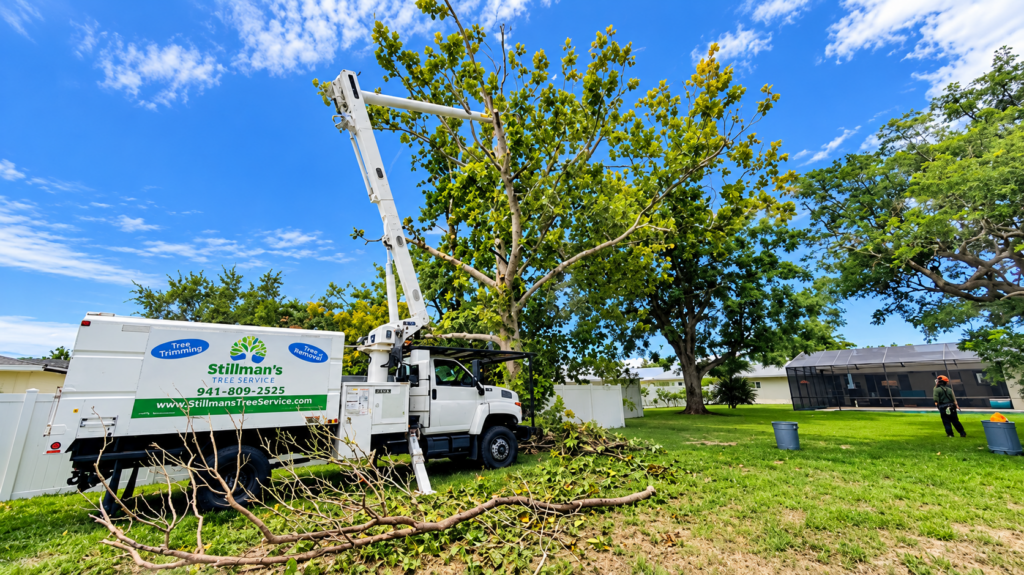
Hedge and shrub trimming keeps a planting at the size and shape you want without cutting it back so far that it cannot recover. Done right, it is regular, light work. Done wrong, it leaves a hedge bare in the middle, a flowering shrub with no flowers, or a plant that never grows back. Stillman’s Tree Service has worked across Manatee County and north Sarasota County for twenty years, family owned and owner operated, licensed and insured. We trim hedges and shrubs, and we can tell you when a hedge is really a small tree or is past saving. The estimate is free and starts with a walk of the property.
What Hedge and Shrub Trimming actually involves
Why the shape matters
A hedge is trimmed slightly wider at the base than at the top, so sunlight reaches the lower leaves. A hedge cut straight-sided, or wider on top, shades its own bottom, and the lower branches drop their leaves and go bare, usually within a season or two. Bare wood at the base does not always fill back in. The cut itself belongs in the outer layer of leaves, not in the dead interior, which is why hedges are trimmed often and lightly instead of rarely and hard.
What each plant will tolerate
Whether a plant can take a hard cut depends on whether it can sprout new growth from bare wood. Ficus, viburnum, clusia and hibiscus usually can. Junipers cannot, and a juniper cut back into leafless wood often stays bare or dies. Podocarpus sits between, taking a trim but not a cutback into bare wood. Thorns on bougainvillea and the toxic sap of oleander change how a job is handled, not whether it can be done. Typical response to a hard cutback, which varies with the variety and its condition:
Flowering shrubs and timing
Flowering shrubs bloom on either old or new growth, and a cut at the wrong time removes the flowers for the year. Azaleas and similar spring bloomers set their buds on last year’s growth, so they are trimmed right after they flower. Hibiscus flowers on new growth and takes trimming through the growing season. Timing also follows the weather. Growth is fastest in the summer rainy season, and a heavy trim in late fall can push tender new growth just ahead of a cold snap that burns it.
Ficus hedges, roots and whitefly
Ficus is one of the most common hedges here and one of the most vigorous. It tolerates hard cutting, but its roots reach pipes, drains and pavement, and ficus whitefly, an insect that causes leaves to drop, is common on it. A thinning ficus hedge is not always a trimming problem. If the leaf drop comes from the whitefly, it is a tree health and disease treatment question first and a trimming question afterward.
What is hiding in the hedge
A hedge holds more than leaves. Irrigation heads, low-voltage lights, cables and wires run through them, and wasps, bees and birds live in them. Active nests of protected birds cannot be disturbed, and nesting runs through much of the spring and summer, so a hedge with an active nest waits. We look before we cut, and we check irrigation and lights at the estimate, because a cut line costs more than the trim.
When a hedge needs renewal, not trimming
A hedge that is thin, leggy, bare inside or too tall for its spot is not always fixed by trimming. Species that sprout from old wood can be cut back hard and rebuilt over a season or two, which looks rough in between. Species that cannot be replaced. Either way, the estimate says which it is, because cutting back a hedge you hoped to save and watching it fail costs more than an honest answer up front.
| Plant | Hard cutback |
|---|---|
| Ficus | Usually recovers |
| Viburnum | Usually recovers |
| Clusia | Usually recovers |
| Hibiscus | Usually recovers |
| Podocarpus | Trim only, do not cut into bare wood |
| Juniper | Does not regrow from bare wood |
| Azalea | Prune right after it flowers |
When it is the right answer and when it is not
Trimming is the right answer when the plants are healthy and the problem is size, shape or clearance:
- A hedge along a fence or a privacy screen that has outgrown its line.
- Foundation shrubs pressing on a wall, gutter, window or pool cage.
- Plants growing into a walk, drive, light or sightline.
- A flowering shrub that needs shaping at the right time of year.
It is not the right answer, and we will say so, in these cases:
- The plant is really a tree. An overgrown ficus, clusia or viburnum can have a trunk as thick as a small tree. That is tree trimming or, if it has to go, tree removal.
- The hedge is dead, diseased or bare inside and past recovery. Replacing it is the honest answer, and if it is worth saving, tree health and disease treatment comes first.
- It is the wrong time. A flowering shrub about to bloom waits, and a hedge with an active bird nest waits.
- You want a juniper or similar plant cut back into bare wood. It will not grow back, and we will say no.
- You want lawn care, planting, design, mulch or irrigation work. Those belong to a landscaper. We trim.
- The plant is a mangrove. Mangroves are not hedges and are protected under state law.
- The hedge sits on a property line. It belongs to both sides, and a conversation with your neighbor comes first.
- If the right answer for your hedge is a lighter trim, or no trim, the estimate says so.
How the job runs
Free estimate
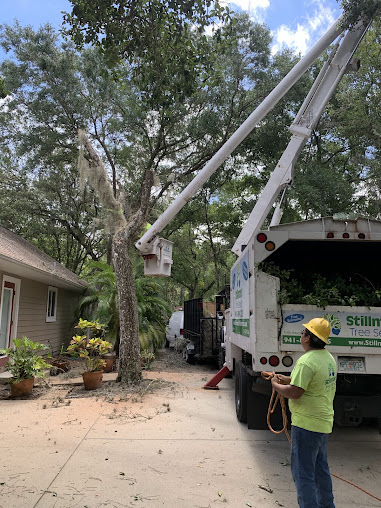
We walk the property hedge by hedge, and check what runs through them, what sits next to them and how we would reach them.
Scope in plain terms
The estimate says the shape, how much comes off, what stays and what happens to the clippings. If the honest answer is a lighter trim, that is the quote.
The plan
Timing against bloom, cold weather and nesting, and protection for nearby plants, fences, lights and a pool cage, are settled before the day.
The work
Plants are cut to the agreed shape with sharp, clean tools. Stillman's is family owned and owner operated, and the crew works to the scope you were given.
Cleanup
Clippings and debris are hauled or handled as agreed, and the area is left clean.
The hedges of a typical home are a short visit. Long runs, tall hedges, an overgrown cutback or a large property take longer, and the estimate says how long.
What it costs
Most residential hedge and shrub trimming jobs in Manatee County fall between $150 and $2,500. Where yours lands depends on:
Length and height
A long, tall hedge takes more time and more reach than a short one.
Number of plants
Many shrubs across a property add up.
How overgrown it is
A hedge kept up through the year is a lighter job than one that has been left.
The species
Thorns, toxic sap or a plant that needs careful timing change the work.
Access and slope
A hedge behind a gate, on a slope or beside a pool cage takes longer.
What runs through it
Irrigation, lights and wires slow the cut.
Clippings
Hauling away a large cutback costs more than a light trim.
One visit or regular visits
A trimming kept up on a schedule is lighter each time.
A short run of low shrubs sits toward $150. A long, tall, overgrown hedge with a heavy cutback and a lot to haul sits toward $2,500. If another quote is far below both, check whether it plans to cut a juniper into bare wood or leave the clippings. Stillman’s carries General Liability and Workers Compensation, and the certificate is available on request. The estimate is free.
Permits
Trimming a hedge or shrub does not usually need a permit. Other rules do apply. Homeowner associations often set hedge heights, local codes can limit height near corners and driveways for sightlines, and mangroves are regulated under state law, so check before touching one. Rules differ between Manatee County, Sarasota County and the City of Bradenton: Manatee County tree permits, Sarasota County tree permits and City of Bradenton tree permits.
Florida Statute 163.045 is about trees on residential property that pose an unacceptable risk, not about hedges. It matters only if an overgrown plant turns out to be a tree that has to come down, and it is not a way around every permit for every tree. In that case Stillman’s can sign the documentation, and the estimate costs nothing. See the Florida Statute 163.045 page.
Where we work
Hedge and shrub trimming is one service across the whole territory, with no separate town pages by design, so this is the full statement of coverage. Stillman’s works from its yard at 2509 9th St W in Bradenton and serves 28 communities within about 15 miles, across Manatee County and north Sarasota County, including Bradenton, Palmetto, Ellenton, Parrish and Lakewood Ranch, along with {COMMUNITY_LIST}. On the island towns, salt spray burns foliage and shapes what grows. Inland, fast summer growth and sandy soil set the pace. For the trees on the same property, see tree trimming.
Hedge and Shrub Trimming FAQ
How much does hedge and shrub trimming cost in Bradenton?
Most residential jobs fall between $150 and $2,500. The price moves with the length and height of the hedge, the number of plants, how overgrown they are, access and the clippings. The estimate is free.
Is the estimate really free?
Yes. Stillman’s does not charge to look at a hedge or to give you a price. You get the scope and the number before any work is scheduled.
How often should a hedge be trimmed?
It depends on the species and the season. Most Florida hedges grow fastest in the summer rainy season, so they need trimming more often then. Light, regular trimming is better for the plant than an occasional hard cut.
When is the right time of year to trim shrubs?
It depends on the plant. Spring bloomers such as azaleas are trimmed right after they flower, and a heavy trim in late fall can push tender growth ahead of a cold snap. The estimate sets the timing for yours.
Why is my hedge bare at the bottom?
Usually because the top was cut wider than the base, which shades the lower leaves until they drop. Some bare wood does not fill back in. The estimate says whether your hedge can be rebuilt or is better replaced.
Can any hedge be cut back hard?
No. Ficus, viburnum, clusia and hibiscus usually recover from a hard cutback. Junipers do not regrow from bare wood, and podocarpus takes a trim but not a cut into bare wood.
Will you trim a hedge with a bird nest in it?
Not while the nest is active. Nests of protected birds cannot be disturbed, and nesting runs through much of the spring and summer. We look before we cut, and the hedge waits.
My ficus hedge is losing leaves. Is it a trimming problem?
Often it is not. Ficus whitefly, an insect that causes leaf drop, is common on ficus. We look at the hedge first and tell you whether it needs treatment before a trim.
Do I need a permit to trim a hedge?
Usually not. Homeowner associations and local codes may set height limits, and mangroves are regulated under state law and are not hedges. Check before trimming one.
Do you take away the clippings?
Yes, as agreed at the estimate. A hard cutback produces a large volume of green material, and what happens to it is settled before work starts.
Get a free estimate
Call Stillman’s Tree Service at 941-803-1309 and tell us what is growing, how long the runs are and what you want them to look like. The estimate is free, it comes before any work, and if the answer is a lighter trim, or waiting for the right time, that is what we will tell you. Stillman’s Tree Service, 2509 9th St W, Bradenton, FL 34205. Family owned and owner operated for twenty years, licensed and insured.