
- Home
- Services
- Service Areas
Bradenton, FL
Samoset, FL
Palmetto, FL
West Bradenton, FL
Oneco, FL
Bayshore Gardens, FL
Ellenton, FL
Memphis, FL
Whitfield, FL
Palma Sola, FL
Terra Ceia, FL
Longboat Key, FL
Cortez, FL
Rubonia, FL
Bradenton Beach, FL
Holmes Beach, FL
The Meadows, FL
Sarasota, FL
Anna Maria, FL
Parrish, FL
Fruitville, FL
Lakewood Ranch, FL
Sarasota Springs, FL
Bee Ridge, FL
Lake Sarasota, FL
Siesta Key, FL
Gulf Gate Estates, FL
- About
- Contact
Tree Trimming in Bradenton and Manatee County
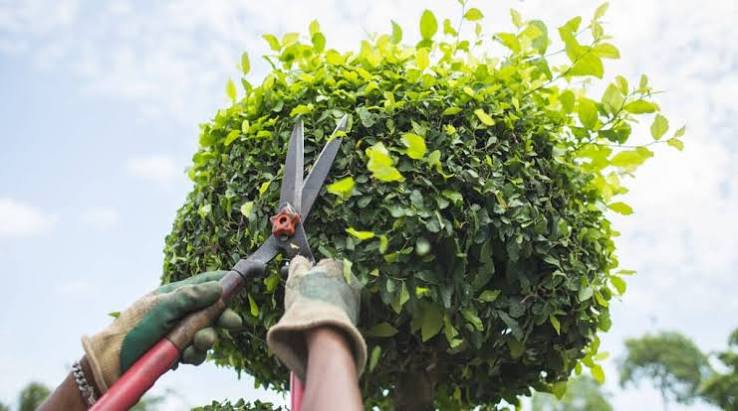
Tree trimming means removing specific branches for a specific reason: dead wood, weight over a roof, limbs rubbing a screen enclosure, or a crown so dense that wind loads it like a sail. Done to ANSI A300 standards, the cuts are small and the tree can close the wound. Done badly, it is topping, and the damage is permanent. Stillman’s Tree Service has trimmed trees across Manatee and north Sarasota County for twenty years, family owned and owner operated, licensed and insured. The estimate is free.
What Tree Trimming actually involves
Deciding what to cut and what to leave
Every cut needs a reason you can name. ANSI A300 also limits how much live crown comes off in one visit, because a tree makes its food in its leaves. A common ceiling is about a quarter of the live crown in a season, so a tree that needs more gets more than one visit.
What a proper cut looks like
A branch grows from a swollen collar, and that collar is where the tree closes a wound. A proper cut stays just outside it. A stub left beyond it rots back into the trunk, and a flush cut opens a wound the tree cannot close.
Cleaning, thinning, raising and reducing
Cleaning takes out dead and broken wood. Thinning removes selected live branches to cut weight and let wind through. Reduction shortens a limb back to a side branch large enough to take over. Topping and hat-racking cut to stubs instead, and neither can be undone.
Working over screens, cages and roofs
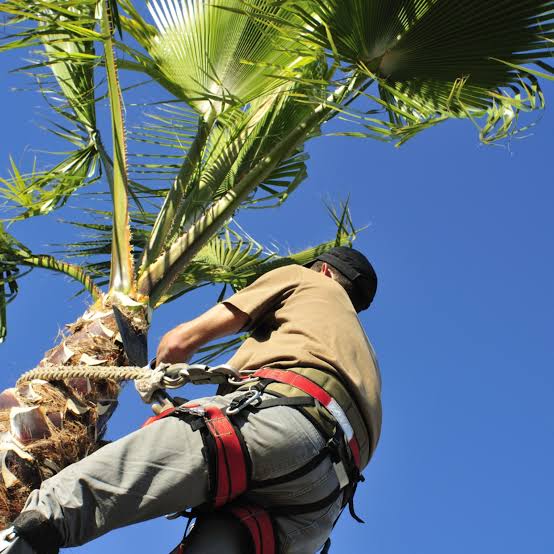
On a Florida lot, limbs often hang over a pool cage, a roof and a fence at once. Limbs that cannot fall clear are cut in pieces and lowered on rigging to a spot chosen in advance.
How palms are trimmed
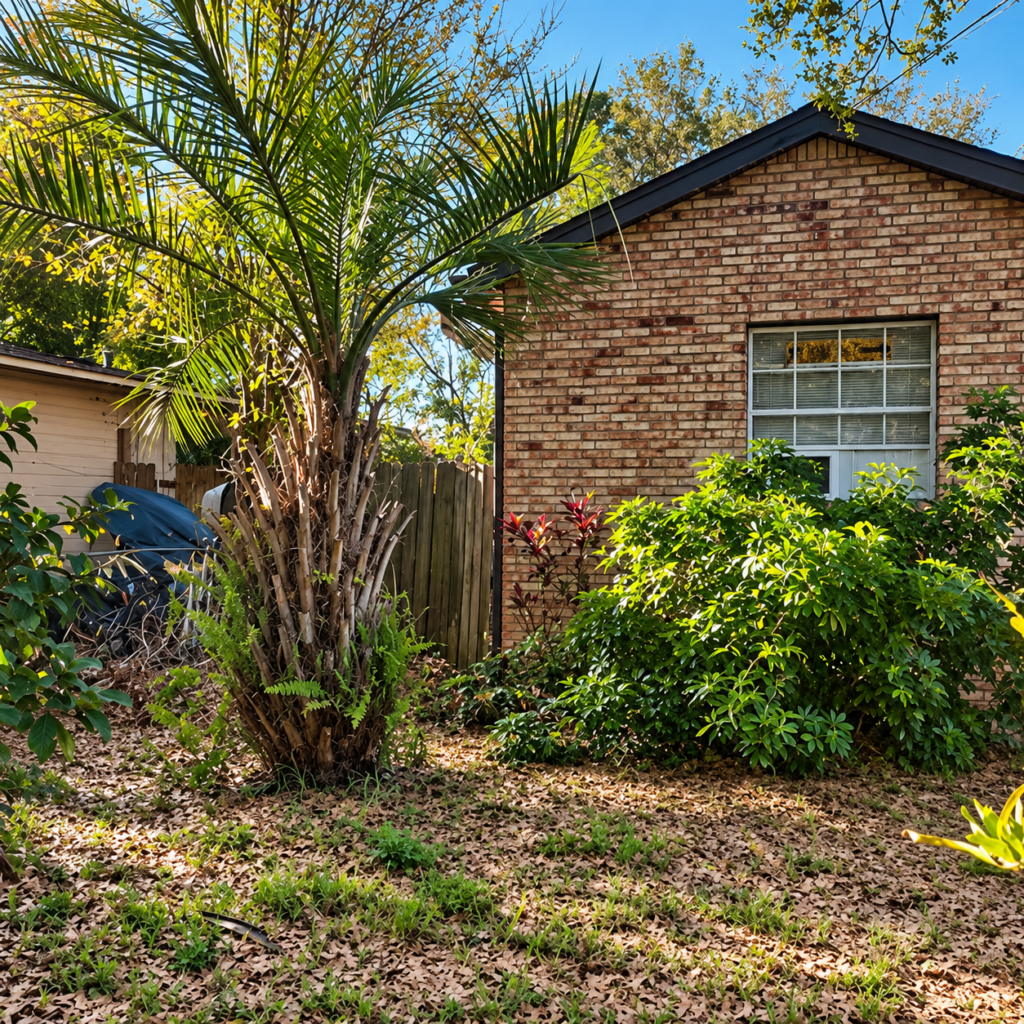
A palm cannot close a wound, and every frond comes from one bud at the crown. Palm trimming is limited to dead fronds, old fruit stalks and hanging boots. Cutting green fronds, the hurricane cut, starves the palm and leaves a thin crown that handles wind worse.
| Tree | Typical interval |
|---|---|
| Live oak | Every 3 to 5 years |
| Sabal palm | Every 1 to 2 years |
| Queen or coconut palm | Once or twice a year |
When it is the right answer and when it is not
Trimming is the right answer when the tree is sound and a cut can fix the problem: deadwood or hangers over a drive or roof, weight over a cage, or a crown dense enough to load like a sail. It does not make a tree storm-proof.
It is not the right answer, and we will say so, when:
- The tree is dead, or the trunk is hollow, split or decayed at the base. That is a job for tree removal.
- The root plate has moved. Heaved soil or a new lean is a root problem pruning cannot reset.
- Two stems share a crowded union. A cable may be the smaller answer, though it cannot repair a union that has already split.
- The tree is declining from a pest or fungus. Tree health and disease treatment comes first.
- A palm has lethal bronzing at the crown. Once it shows there, the palm cannot be saved.
We do not top trees, however the request is worded. If the answer is a lighter cut, or no cut, the estimate says so.
How the job runs
Free estimate
We look at the tree, what sits under it and how we reach it.
The plan
Branches to come off, drop zone, rigging and any lift are settled before the day.
The work
Cuts follow ANSI A300, and limbs over cages and roofs are lowered, not dropped.
Cleanup
Brush and debris are handled as agreed.
What it costs
Most residential tree trimming jobs in Manatee County fall between $150 and $2,500. Height, access, what sits underneath and the species move the price. A light cleaning of a small tree in the open sits toward $150. A mature live oak over a house and pool cage sits toward $2,500. If another quote is far below both, check whether it means topping.
Permits
Routine trimming is less regulated than removal, but not unregulated. Rules differ between Manatee County, Sarasota County and the City of Bradenton. See Manatee County tree permits, Sarasota County tree permits and City of Bradenton tree permits.
Florida Statute 163.045 limits what a local government can require for residential tree work when documentation shows the tree poses an unacceptable risk. It is not a way around every permit. Stillman’s can sign that documentation, and the estimate costs nothing. See the Florida Statute 163.045 page.
Where we work
Stillman’s works from 2509 9th St W in Bradenton and serves 28 communities within about 15 miles. On the island towns, salt and wind shape how crowns grow. Palms have their own page at palm tree trimming.
FAQ
How much does tree trimming cost in Bradenton?
Most residential jobs fall between $150 and $2,500, depending on height, how much comes off, access, what sits underneath and the species. The estimate is free.
Is the estimate really free?
Yes. Stillman’s does not charge to look at a tree or to give you a price. You get the scope and the number before any work is scheduled.
What is the difference between tree trimming and pruning?
Nothing in the work. Pruning is the arborist word and trimming is what most people call it. Either way, the job should follow ANSI A300.
What is topping, and why do you not do it?
Topping cuts limbs back to stubs with no side branch to take over. The tree grows weak shoots, the stubs decay, and the damage is permanent.
How often should a live oak be trimmed?
A mature live oak typically needs work every 3 to 5 years, plus a look after a major storm. Your estimate gives the real interval.
Do I need a permit to trim a tree in Manatee County?
Routine trimming usually needs less than removal, but it depends on the tree and the property. Heavy pruning of some protected trees can need approval.
Can you trim a tree that hangs over a pool cage or roof?
Yes. Limbs that cannot fall clear are cut in pieces and lowered on rigging to a spot chosen in advance. The plan is set at the estimate.
Should I trim my trees before hurricane season?
Trimming a sound tree ahead of June is reasonable upkeep, but it does not make a tree storm-proof. A dead, leaning or decayed tree is a removal question, not a trimming one.
Get a free estimate
Call Stillman’s Tree Service at 941-803-1309 and tell us which tree it is and what it is doing. The estimate is free and comes before any work.