- Home
- About
- Services
- Resources
- Do You Need a Permit to Remove a Tree in Manatee County
- Do You Need a Permit to Remove a Tree in Sarasota County
- Bradenton City Tree Removal Permits
- Florida Tree Removal Law 163.045
- What Tree Removal Costs in Manatee and Sarasota County
- Palm Tree Trimming Cost in Bradenton, Florida Guide
- Bradenton Hurricane Tree Prep
- Tree Topping in Florida
- Is Your Tree Dangerous? Warning Signs in Bradenton, Florida
- Live Oaks in Manatee County: Protected, Pruned and Misunders
- Florida Palm Tree Care | Sabal, Queen, Coconut and Date
- Storm Damage Tree Removal and Insurance in Bradenton
- Signs of Tree Decline in Florida
- Florida Tree Service Checklist
- Service Areas
Bradenton, FL
Samoset, FL
Palmetto, FL
West Bradenton, FL
Oneco, FL
Bayshore Gardens, FL
Ellenton, FL
Memphis, FL
Whitfield, FL
Palma Sola, FL
Terra Ceia, FL
Longboat Key, FL
Cortez, FL
Rubonia, FL
Bradenton Beach, FL
Holmes Beach, FL
The Meadows, FL
Sarasota, FL
Anna Maria, FL
Parrish, FL
Fruitville, FL
Lakewood Ranch, FL
Sarasota Springs, FL
Bee Ridge, FL
Lake Sarasota, FL
Siesta Key, FL
Gulf Gate Estates, FL
- Contact
Signs of Decline: Rot, Lightning Damage and Root Problems in Florida Trees
Tree decline can cause thinning foliage, dead branches, trunk cavities, fungal growth and changes around the roots. In Florida, lightning strikes, decay, root damage and storms can affect tree health and stability. These signs do not always mean removal is necessary, but visible decay, a new lean, major cracks or shifting soil deserve attention, especially when the tree is near your home or driveway.
What Are the Common Signs of Tree Decline?
A declining tree may show changes in its leaves, branches, trunk or roots. Common warning signs include:
- Thinning foliage: The crown develops bare areas or fewer leaves than usual.
- Dead branches: Limbs show dieback or stop producing growth.
- Trunk cracks: Splits, open seams or unusual swelling appear.
- Fungal growth: Mushrooms or conks appear on the trunk or near the base.
- Root movement: Soil lifts around the trunk or the tree develops a new lean.
- Bark damage: Sections of bark split, loosen or disappear.
Some seasonal leaf changes are normal. However, symptoms that persist, spread or appear alongside structural damage deserve closer attention.
How Can You Recognize Rot Inside a Tree?
Tree decay develops when fungi break down wood. It can affect the trunk, branches or roots, reducing the strength of the damaged area. A tree may still have green leaves even when internal decay is present.
Possible signs include trunk cavities, cracks, dead branch stubs, missing wood and fungal conks. These growths may indicate decay inside the tree, but their appearance alone cannot show how much sound wood remains.
A hollow trunk does not automatically mean removal is necessary. The location and extent of decay, the tree’s remaining structure and what it could strike if it failed all matter. Decay near the trunk base or a major branch union deserves particular attention.
What Does Lightning Damage Look Like on Florida Trees?
Lightning is a significant cause of tree injury in Florida because thunderstorms are common. A strike can split bark, damage internal tissues, break branches or affect roots. Some injuries appear immediately, while other symptoms develop later.
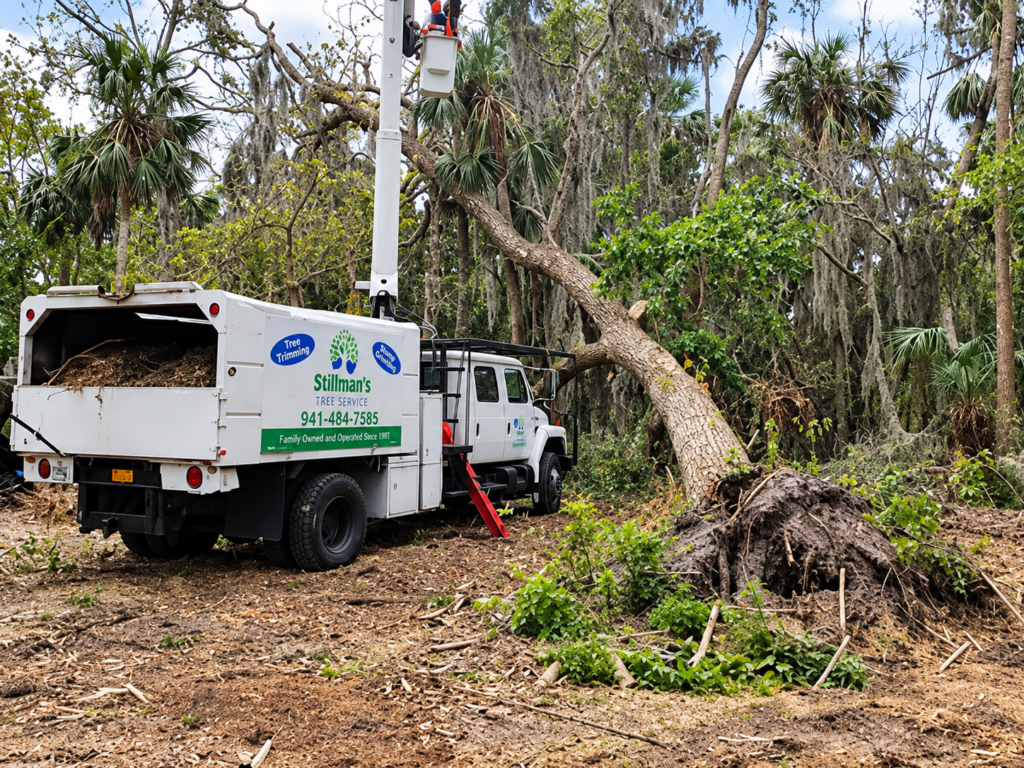
Signs may include strips of missing bark, trunk splits, broken limbs, sudden wilting or gradual crown decline. A live oak may retain green foliage after a strike, so a healthy-looking canopy does not necessarily mean the tree escaped serious damage.
Not every lightning-damaged tree needs removal. The decision depends on the injury, the tree’s remaining structure and its location. Some trees recover, while severe trunk or root damage may make removal appropriate.
If a damaged tree has hanging limbs, a split trunk or signs of movement, keep clear and arrange professional help. Do not climb the tree or attempt to remove damaged branches yourself.
How Do Root Problems Affect Tree Stability?
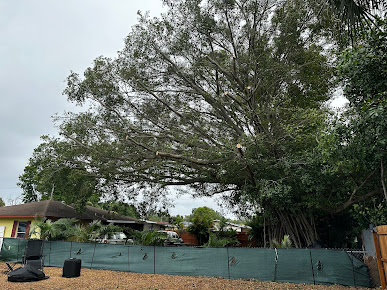
Roots absorb water and nutrients while anchoring the tree. Decay, physical damage or changes in surrounding soil can reduce that support. Warning signs include fungal growth near the base, a new lean, soil lifting around the trunk or a thinning crown. Construction, soil compaction, changes in ground level and damaged roots can contribute to these problems.
Bradenton-area properties may have sandy soil, making root condition and anchorage important considerations. Heavy rain and strong winds can place additional demands on a tree’s root system. The root plate is the connected area of roots and soil that helps anchor a tree. Soil movement or lifting around this area may indicate instability, particularly when the tree has recently started leaning. Root damage is often hidden underground. Avoid digging around the base or disturbing suspected damaged roots. A tree professional can help determine whether treatment, pruning or removal is appropriate.
Can a Declining Tree Be Saved or Does It Need Removal?
The right option depends on the cause of decline, the tree’s remaining structure and its location.
Tree health treatment
may help when a disease or other identifiable problem can be managed.
Pruning
can address certain dead or damaged branches, but it cannot reverse advanced decay or repair every structural defect.
Removal
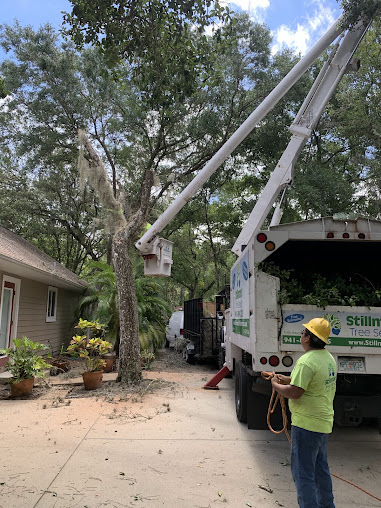
may be appropriate when extensive decay, major trunk damage or root failure makes the tree unsuitable for its location. Crane-assisted removal may be considered when the tree's position or site access calls for it.
A defect over an open part of the yard presents a different situation from one above a house or regularly used driveway. Not every declining tree needs removal, and green foliage alone does not prove that a tree is structurally sound.
Does Florida Statute 163.045 Apply to a Dangerous Tree?
Florida Statute 163.045 limits local government requirements for certain tree work on qualifying residential property when documentation shows that a tree poses an unacceptable risk.
The documentation must be based on an onsite assessment following Best Management Practices: Tree Risk Assessment, Second Edition (2017) and signed by an ISA Certified Arborist or a Florida-licensed landscape architect.
When the statute applies, the local government cannot require notice, an application, approval, a permit, a fee or mitigation for the covered work. It also prohibits replanting under this section.
The exemption is limited to qualifying residential property and trees that genuinely meet the unacceptable-risk standard. It is not a blanket exemption from every tree permit requirement, and other applicable protections may still matter.
Stillman’s Tree Service has an ISA Certified Arborist on staff and can sign qualifying documentation. The estimate is free.
FAQ
Does a tree have to be dead before removal is considered?
No. A living tree may have serious decay, damaged roots or structural defects. The decision depends on its condition and the risk it presents at its location.
Can a tree recover after a lightning strike?
Some trees recover, while others decline over time. The extent of the injury and the condition of the trunk, branches and roots affect the outcome.
Do mushrooms at the base mean a tree is rotten?
They may indicate fungal activity associated with wood or root decay. Their presence alone cannot establish how extensive the damage is.
Can a tree look healthy but have damaged roots?
Yes. Green foliage does not guarantee sound roots. A new lean or soil movement around the base deserves attention.
Should every declining tree be removed?
No. Some trees may be suitable for treatment or pruning. Removal depends on the damage, structural condition and surrounding property.
Get Help With a Declining Tree in Bradenton
If your tree has visible decay, lightning damage, dead limbs or signs of root instability, Stillman’s Tree Service can discuss suitable next steps and provide a free estimate. Call 941-803-1309.
Serving Bradenton, Manatee County and north Sarasota County.