- Home
- About
- Services
- Resources
- Do You Need a Permit to Remove a Tree in Manatee County
- Do You Need a Permit to Remove a Tree in Sarasota County
- Bradenton City Tree Removal Permits
- Florida Tree Removal Law 163.045
- What Tree Removal Costs in Manatee and Sarasota County
- Palm Tree Trimming Cost in Bradenton, Florida Guide
- Bradenton Hurricane Tree Prep
- Tree Topping in Florida
- Is Your Tree Dangerous? Warning Signs in Bradenton, Florida
- Live Oaks in Manatee County: Protected, Pruned and Misunders
- Florida Palm Tree Care | Sabal, Queen, Coconut and Date
- Storm Damage Tree Removal and Insurance in Bradenton
- Signs of Tree Decline in Florida
- Florida Tree Service Checklist
- Service Areas
Bradenton, FL
Samoset, FL
Palmetto, FL
West Bradenton, FL
Oneco, FL
Bayshore Gardens, FL
Ellenton, FL
Memphis, FL
Whitfield, FL
Palma Sola, FL
Terra Ceia, FL
Longboat Key, FL
Cortez, FL
Rubonia, FL
Bradenton Beach, FL
Holmes Beach, FL
The Meadows, FL
Sarasota, FL
Anna Maria, FL
Parrish, FL
Fruitville, FL
Lakewood Ranch, FL
Sarasota Springs, FL
Bee Ridge, FL
Lake Sarasota, FL
Siesta Key, FL
Gulf Gate Estates, FL
- Contact
Sabal, Queen, Coconut and Date Palms: What Each One Needs
Sabal, queen, coconut and date palms have different growth habits and maintenance needs in Florida. Sabal palms are native and well adapted to local conditions, while queen palms may develop nutrient problems and coconut palms can produce heavy fruit. Date palms have their own canopy and maintenance requirements. Knowing which palm you have helps you understand when trimming is needed and why removing too many green fronds can harm the plant.
Why Palm Species Matters
Palms are not maintained exactly like broadleaf trees. Their leaves, called fronds, grow from a single growing point at the top of each trunk. If that growing point is severely damaged, the palm may not produce new leaves and can die.
Unlike many trees, palms cannot replace a damaged top by developing new branches below it. That makes careful trimming important. Removing healthy fronds for appearance alone can reduce the plant’s ability to produce and store nutrients.
The University of Florida’s UF/IFAS guide to palm pruning explains why a healthy palm should generally retain a full, rounded canopy rather than a narrow crown of upright leaves.
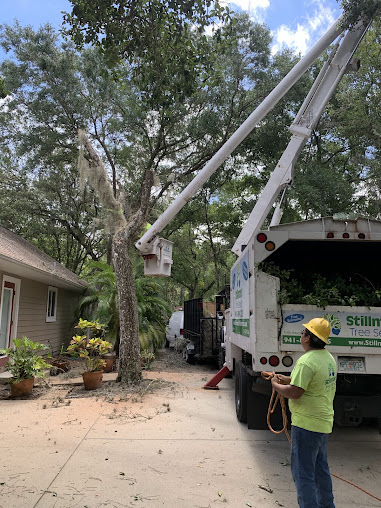
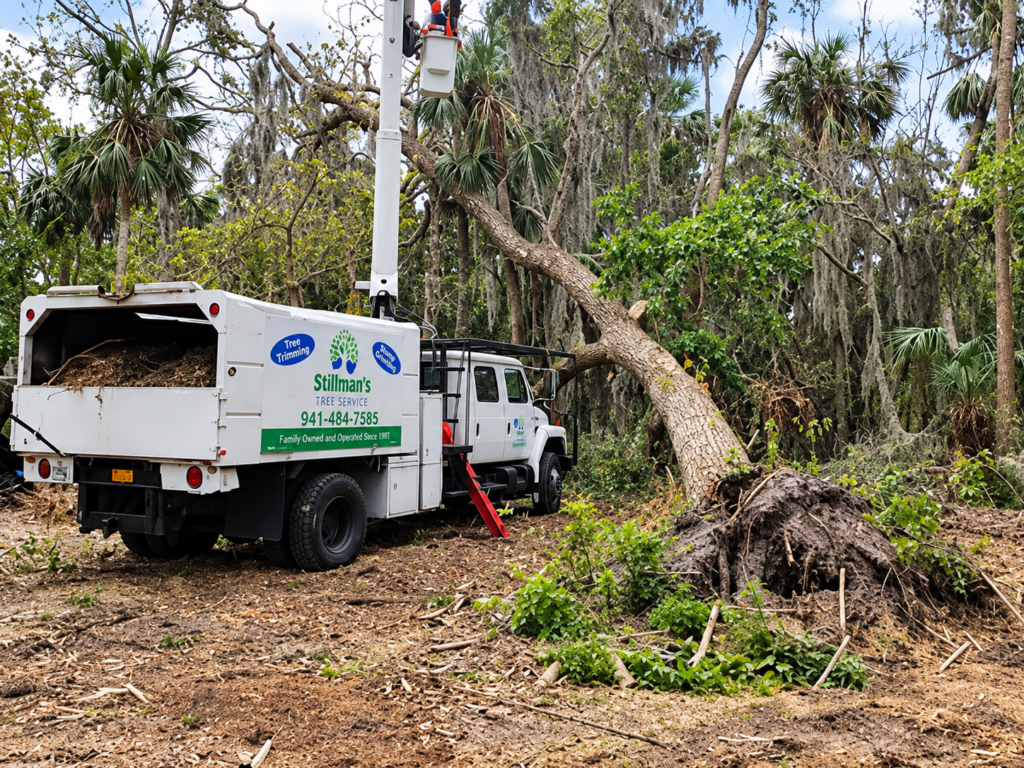
Sabal Palm: Florida’s State Tree
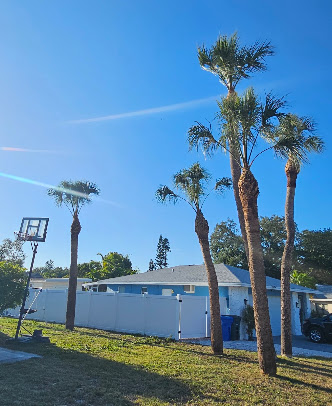
The sabal palm (Sabal palmetto), also called the cabbage palm, is Florida’s state tree. It is native to the region and well adapted to local conditions, including strong winds.
Sabal palms naturally develop a rounded crown of fan-shaped fronds. Older leaves turn brown as the palm grows, but green fronds still contribute to its health. Removing too many living leaves can reduce nutrient availability and weaken the palm.
A sabal palm may need trimming when fully dead fronds, damaged leaves or flower and fruit stalks create a maintenance concern. It does not need a severe cut simply because hurricane season is approaching.
Sabal palms are also treated differently from many landscape trees in some local rules. Do not assume that every palm is exempt from regulation or that every removal requires the same process. Check the rules for your property before arranging removal.
Queen Palm: Watch for Yellowing and Decline
Queen palms (Syagrus romanzoffiana) are recognizable by their tall, smooth trunks and long, feather-shaped fronds. They are commonly planted in Florida landscapes, but can develop nutrient deficiencies that affect leaf colour and growth.
Yellowing fronds do not automatically mean the palm needs trimming. Some leaves may still be alive and helping supply nutrients. Removing them too early can reduce the palm’s remaining healthy foliage without addressing the underlying problem.
If a queen palm has a thinning crown, unusual yellowing or declining growth, consider whether nutrition, growing conditions or another health issue may be involved. Trimming alone will not correct every cause of decline.
As with other palms, avoid excessive pruning. The goal is to address dead or damaged growth while preserving healthy fronds.
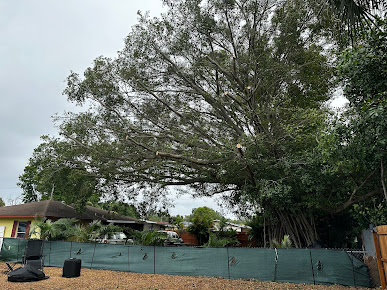
Coconut Palm: Consider Fruit and Location
Coconut palms (Cocos nucifera) bring a tropical appearance to coastal and warm-climate properties. Their long fronds and heavy coconuts require consideration when the palm stands near a home, driveway, walkway or outdoor seating area.
Fallen coconuts can damage property or injure someone. Fruit removal may therefore be part of routine maintenance where coconuts could fall into an occupied area. Dead or damaged fronds may also need attention.
Salt exposure can affect landscape choices in coastal areas, but the condition of an individual palm still depends on its growing environment and overall health.
Do not confuse a hurricane cut with appropriate maintenance. Removing most of a coconut palm’s green fronds does not make it storm-proof and may leave the palm more vulnerable to damage.
Date Palm: Identify the Type Before Trimming
“Date palm” can refer to different species, including the date-producing Phoenix dactylifera and ornamental palms in the same genus. Their size, trunk form and canopy characteristics can vary.
Some date palms retain old frond bases along the trunk, while others have different growth characteristics. Dead leaves, fruit stalks and damaged growth may need attention, depending on the species and location.
Spines on some date palms can also make maintenance more difficult. A palm growing beside a driveway or walkway may need attention if its fronds or spines interfere with access.
Correct identification helps determine what maintenance is suitable. A trimming approach that works for one palm should not automatically be used on another.
Why a Hurricane Cut Can Harm a Palm
A hurricane cut removes most of a palm’s fronds, leaving only a small cluster near the top. It is sometimes promoted as a way to reduce wind resistance, but UF/IFAS guidance warns that excessive pruning can weaken palms and increase the risk of crown failure during strong winds.
Green fronds help the palm produce nutrients. Removing them unnecessarily reduces the foliage available to support growth. Older fronds can also provide support and protection for newer leaves.
Appropriate maintenance generally focuses on fully dead or damaged fronds and other specific concerns, rather than stripping away healthy growth. The amount of trimming required depends on the palm species, condition and location.
Do You Need a Permit to Trim or Remove a Palm?
Requirements depend on your property’s location, type and the work involved. Rules in unincorporated Manatee County may differ from those inside the City of Bradenton or another jurisdiction.
Manatee County identifies permit requirements for trees in certain HOA common areas, commercial properties and conservation areas. Review the county’s official tree removal guidance before arranging regulated work.
If your property is within Bradenton city limits, consult the City of Bradenton’s Planning and Zoning Forms for its separate application requirements.
FAQ
How often should Florida palms be trimmed?
There is no single schedule for every species. Trimming needs depend on the palm’s condition, dead fronds, fruit and location. Avoid removing healthy fronds just to make the crown look smaller.
Should green palm fronds be removed?
Generally, healthy green fronds should remain. They support nutrient production, and removing too many can weaken the palm.
Does hurricane pruning protect palms from storms?
No. UF/IFAS warns that severe pruning can increase the risk of crown damage. Routine maintenance should not strip away healthy foliage.
Are sabal palms maintained differently from queen palms?
Yes. They have different growth characteristics and potential maintenance concerns. Sabal palms are native to Florida, while queen palms can experience nutrient-related leaf yellowing.
When should a palm be removed?
Removal may be necessary if a palm has severe structural damage, a failed trunk or an irreparably damaged growing point. The decision depends on its condition and surroundings.
Request a Palm Trimming Estimate
If your sabal, queen, coconut or date palm has dead fronds, damaged growth or fruit near a walkway or structure, Stillman’s Tree Service can discuss suitable maintenance. Call 941-803-1309 for a free estimate.
Serving Bradenton, Manatee County and north Sarasota County.