- Home
- About
- Services
- Resources
- Do You Need a Permit to Remove a Tree in Manatee County
- Do You Need a Permit to Remove a Tree in Sarasota County
- Bradenton City Tree Removal Permits
- Florida Tree Removal Law 163.045
- What Tree Removal Costs in Manatee and Sarasota County
- Palm Tree Trimming Cost in Bradenton, Florida Guide
- Bradenton Hurricane Tree Prep
- Tree Topping in Florida
- Is Your Tree Dangerous? Warning Signs in Bradenton, Florida
- Live Oaks in Manatee County: Protected, Pruned and Misunders
- Florida Palm Tree Care | Sabal, Queen, Coconut and Date
- Storm Damage Tree Removal and Insurance in Bradenton
- Signs of Tree Decline in Florida
- Florida Tree Service Checklist
- Service Areas
Bradenton, FL
Samoset, FL
Palmetto, FL
West Bradenton, FL
Oneco, FL
Bayshore Gardens, FL
Ellenton, FL
Memphis, FL
Whitfield, FL
Palma Sola, FL
Terra Ceia, FL
Longboat Key, FL
Cortez, FL
Rubonia, FL
Bradenton Beach, FL
Holmes Beach, FL
The Meadows, FL
Sarasota, FL
Anna Maria, FL
Parrish, FL
Fruitville, FL
Lakewood Ranch, FL
Sarasota Springs, FL
Bee Ridge, FL
Lake Sarasota, FL
Siesta Key, FL
Gulf Gate Estates, FL
- Contact
Land Clearing and Lot Clearing in Manatee and Sarasota County
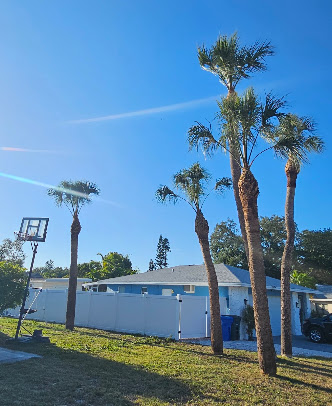
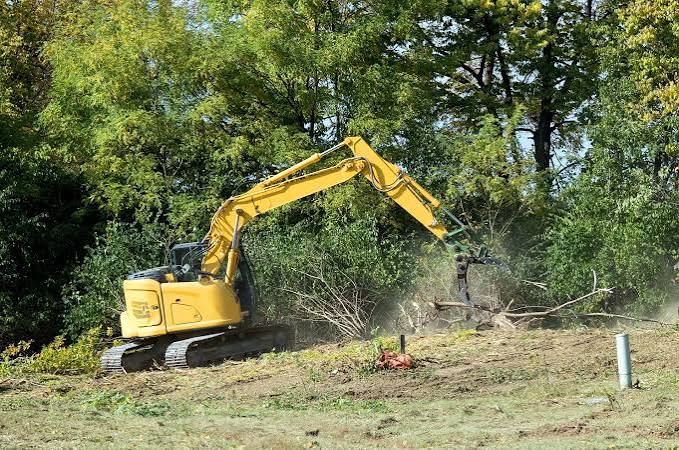
Land clearing removes the trees, brush and stumps from raw ground so a builder, developer or landowner can survey it, permit it and build on it, or put it to use. Lot clearing is the same work on a smaller parcel. Most of it here happens in the east Manatee growth corridor, in Parrish, Lakewood Ranch, Palmetto and Ellenton. Stillman’s Tree Service has worked across Manatee County and north Sarasota County for twenty years, family owned and owner operated, licensed and insured. The estimate is free and starts with a walk of the property: what is on it, what has to stay, what the county requires first, and what is practical to clear.
What Land Clearing and Lot Clearing actually involves
Walking the property before a quote
A clearing price comes from the ground, not the acreage alone. The walk covers the boundaries and any survey stakes, the size and density of the trees, the undergrowth, wet or low ground, slope, and how a machine gets in and out. It also covers what you cannot see from the road: protected trees, wetland edges, gopher tortoise burrows, which are protected under state rules and handled before any ground is cleared, and old fence lines or dumped debris.
Full clearing versus selective clearing
Full clearing takes everything inside a line, usually a building pad, a drive or a pasture. Selective clearing takes the undergrowth, the dead and weak trees and the invasive growth, and leaves the trees worth keeping. The difference matters here because live oaks and other protected trees can be required to stay, and a mature oak is often worth designing around. Trees that stay need their root zone protected, because a tree can survive the cut and still die later from compacted or damaged roots.
Trees, brush and invasive growth
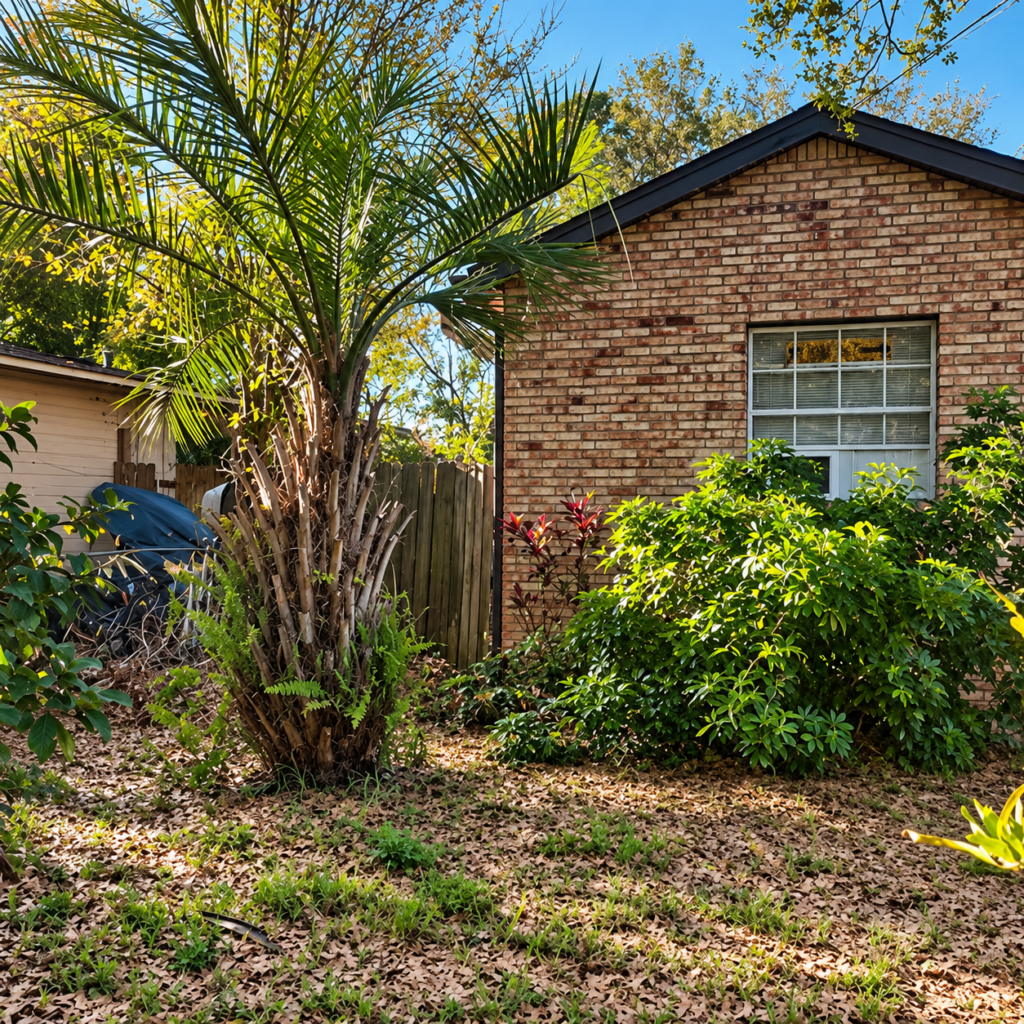
Most of the clearing jobs are not big timber. It has dense understory, vines and fast-growing invasives such as Brazilian pepper, some of which regrow from the stump or root if they are only cut. Large trees come down in sections the way they do on any job, and where a big tree stands close to a structure, fence or line, crane-assisted removal can be the safer route.
What happens to stumps and roots
After the trees come down, the stumps stay unless they are dealt with. For pasture, a trail or land that will sit, stumps can be left. Under a slab, a road or pavers they should not be, because roots decay and the ground settles. Stumps can be ground below grade through stump grinding or removed, and which one depends on what is going on top. Grinding leaves chips and a hollow, so the builder’s soil work comes after it, not before.
Where the debris goes
Cleared material is a large volume, and the plan for it moves the price more than most owners expect. It can be mulched and left on site, which suits some uses and not others, hauled away, or in some cases burned. Open burning needs authorization and is rarely practical near homes or roads or in dry weather, so the estimate says which route applies to your parcel. Leave it undecided and the debris becomes the next problem.
When it is the right answer and when it is not
Land clearing is the right answer when ground has to be cleared of trees, brush and stumps before something else can happen: a build, a pasture, a survey or access to the back of a parcel.
It is not the right answer, and we will say so, in these cases:
- You have one tree or a few on a house lot. That is tree removal, and a tree that can be pruned does not need to come down.
- Approvals are not settled. Clearing before the site plan and permits are in place can lead to stop-work orders and mitigation requirements. Confirm first, then clear.
- The parcel includes wetlands, a conservation easement or protected habitat. Parts of it may not be cleared at all, or only under a separate permit.
- You want grading, fill, drainage or utilities. Clearing prepares the site. Surveys, engineering and earthwork are separate steps, and your surveyor and engineer set the lines. Ask what the estimate covers.
- The trees are healthy and you only want them thinned. Selective clearing, or tree trimming, may do the job and keep the shade.
- The problem is an overgrown yard, not raw land. Hedge and shrub trimming may be all it needs.
- If the right answer for your property is less clearing than you planned, the estimate says so.
How the job runs
Free estimate
We walk the property with you, or with your builder or site manager, and mark what is going and what stays.
Scope and approvals
The estimate states the area, what stays, how debris is handled and which approvals must be in place before work starts.
The plan
Access, staging, the order of work, and how protected trees and boundaries are marked are settled before anything starts.
The clearing
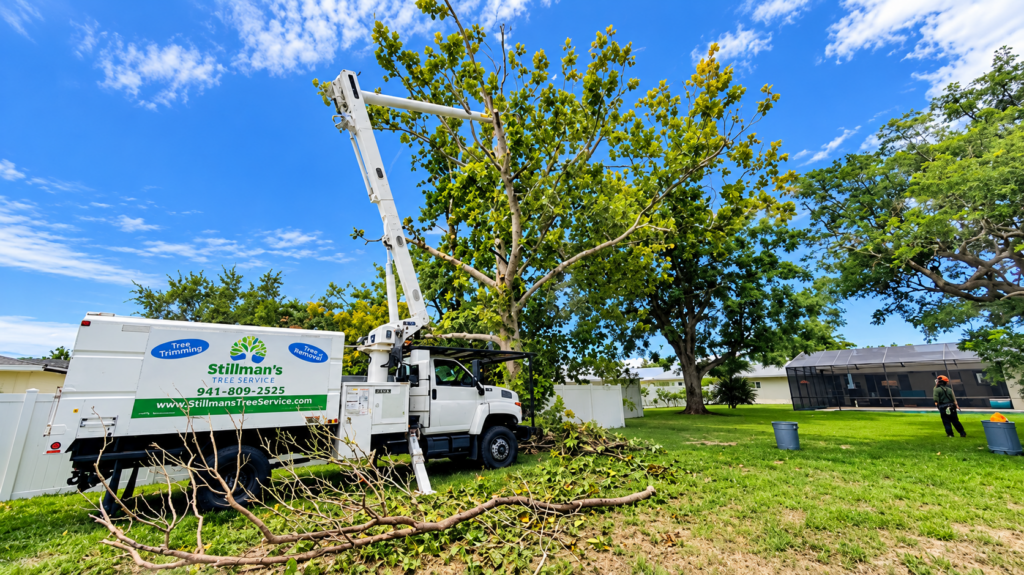
Trees come down first, then brush and grow, then stumps as agreed, working to the marked lines. Stillman's is family owned and owner operated, and the crew works to the scope you were given.
Debris and handover
Material is mulched, hauled or handled as agreed, and the site is left ready for the next trade.
How long it takes depends on acreage, density, access and ground conditions. Wet ground in the summer rainy season slows work and can stop it, so the estimate gives a realistic window instead of a promise.
What it costs
Most land and lot clearing jobs fall between$150 and $2,500. Where yours lands depends on:
Acreage and shape
Larger parcels cost more in total, and an awkward shape or long access road adds time.
Tree size and density
A few mature trees and a thicket of small ones are different jobs.
Undergrowth and invasives
Dense understory and growth that regrows from the root take more work.
Ground conditions
Wet, low or sloped ground slows the work.
Stumps
Leaving them, grinding them and removing them are priced differently.
The debris plan
Mulching on site, hauling and burning change the total.
Protected trees and areas
Marking and working around what stays takes care and time.
Full or selective clearing
Taking everything inside a line costs less per acre than working around trees that stay.
A lightly wooded parcel with easy access sits toward $150. Dense, mature growth with stumps removed and debris hauled sits toward $2,500. If another quote is far below both, check what it leaves out, including stumps, debris and insurance. Stillman’s carries General Liability and Workers Compensation, and the certificate is available on request. The estimate is free.
Permits
Clearing land is regulated more heavily than trimming or removing a tree, and the rules differ between Manatee County, Sarasota County and the City of Bradenton. Depending on the parcel, you may need a site or tree permit, erosion and stormwater controls, a protected-species survey and wetland review before work starts. Your builder, engineer or the county sets what applies. Start with the page for your jurisdiction: Manatee County tree permits, Sarasota County tree permits and City of Bradenton tree permits.
Florida Statute 163.045 limits what a local government can require for tree work on residential property when documentation shows a tree poses an unacceptable risk. It does not cover clearing raw land for development, and it is not a way around a clearing permit. Where it does apply, Stillman’s can sign that documentation, and the estimate costs nothing. See the Florida Statute 163.045 page.
Where we work
Most of this work is in the east Manatee growth corridor: Land Clearing in Parrish, Land Clearing in Lakewood Ranch, Land Clearing in Palmetto and Land Clearing in Ellenton. Stillman’s works from its yard at 2509 9th St W in Bradenton and serves 28 communities within about 15 miles, so parcels elsewhere in Manatee County and north Sarasota County are quoted at the estimate. Sandy soil drains quickly in places and holds standing water in others, which is why we look at the ground before we price it. A homeowner with a few trees should start with tree removal.
Emergency and Storm Damage Tree Service FAQ
How much does land clearing cost in Manatee County?
Most jobs fall between $150 and $2,500. The price moves with acreage, tree size and density, undergrowth, ground conditions, stumps, the debris plan and access. The estimate is free.
Do you clear land for builders and developers, or only landowners?
Builders, developers and acreage owners are who this service is for. The estimate works the same for each and starts with a walk of the parcel.
Is the estimate really free?
Yes. Stillman’s does not charge to walk a property or to give you a price. You get the scope and the number before any work is scheduled.
What is the difference between land clearing and lot clearing?
The work is the same at a different scale. Lot clearing is a single lot, and land clearing is acreage. Both start with a walk of the property.
Do I need a permit before clearing land?
Often, yes. Depending on the parcel you may need a site or tree permit, erosion and stormwater controls, a protected-species survey and wetland review. Manatee County, Sarasota County and the City of Bradenton each have their own rules.
Can you leave the oaks and other trees I want to keep?
Yes. Selective clearing marks the trees that stay and work around them. Their root zones need protecting, because a tree can survive the cut and still die later from damaged roots.
What happens to the stumps?
They can be left, ground below grade or removed, depending on what is going on top. Under a slab, a road or pavers they should not be left. The choice is made at the estimate.
What happens to the brush and debris?
It can be mulched and left on site, hauled away or, in some cases, burned. Open burning needs authorization and is rarely practical near homes or roads, so the estimate says which route applies.
What if there are gopher tortoises on the land?
Gopher tortoises and their burrows are protected under state rules, and burrows have to be identified and handled before ground is cleared. We flag what we see at the estimate, and a protected-species survey may be required before work starts.
How long does clearing take?
It depends on acreage, density, access and ground conditions. Wet ground in the summer rainy season slows work and can stop it, so the estimate gives a realistic window instead of a promise.
Get a free estimate
Call Stillman’s Tree Service at 941-803-1309 and tell us where the parcel is, roughly how many acres it is, and what it is for. The estimate is free, it comes before any work, and if the right answer is less clearing than you planned, that is what we will tell you. Stillman’s Tree Service, 2509 9th St W, Bradenton, FL 34205. Family owned and owner operated for twenty years, licensed and insured.