- Home
- About
- Services
- Resources
- Do You Need a Permit to Remove a Tree in Manatee County
- Do You Need a Permit to Remove a Tree in Sarasota County
- Bradenton City Tree Removal Permits
- Florida Tree Removal Law 163.045
- What Tree Removal Costs in Manatee and Sarasota County
- Palm Tree Trimming Cost in Bradenton, Florida Guide
- Bradenton Hurricane Tree Prep
- Tree Topping in Florida
- Is Your Tree Dangerous? Warning Signs in Bradenton, Florida
- Live Oaks in Manatee County: Protected, Pruned and Misunders
- Florida Palm Tree Care | Sabal, Queen, Coconut and Date
- Storm Damage Tree Removal and Insurance in Bradenton
- Signs of Tree Decline in Florida
- Florida Tree Service Checklist
- Service Areas
Bradenton, FL
Samoset, FL
Palmetto, FL
West Bradenton, FL
Oneco, FL
Bayshore Gardens, FL
Ellenton, FL
Memphis, FL
Whitfield, FL
Palma Sola, FL
Terra Ceia, FL
Longboat Key, FL
Cortez, FL
Rubonia, FL
Bradenton Beach, FL
Holmes Beach, FL
The Meadows, FL
Sarasota, FL
Anna Maria, FL
Parrish, FL
Fruitville, FL
Lakewood Ranch, FL
Sarasota Springs, FL
Bee Ridge, FL
Lake Sarasota, FL
Siesta Key, FL
Gulf Gate Estates, FL
- Contact
What Palm Trimming Costs and How Often a Palm Actually Needs It
Palm tree trimming in Bradenton typically costs between low-price and high-price per palm, depending on height, access, species, and cleanup requirements. However, not every palm needs annual trimming. Removing dead fronds and spent fruit stalks can keep a palm tidy, while cutting healthy green fronds can weaken it. Understanding the right trimming schedule helps you maintain your palms without paying for unnecessary work.
What Affects Palm Tree Trimming Costs?
The cost of palm trimming depends on the work required at your property. These factors influence the estimate:
- Palm height: Taller palms often require specialized equipment, additional labor, and more careful handling.
- Accessibility: Palms near roofs, pools, screened enclosures, docks, or power lines may require more planning and equipment.
- Fronds and fruit: Heavy fruit clusters and large amounts of dead growth increase removal and cleanup work.
- Number of palms: Trimming several nearby palms may reduce the cost per palm because equipment setup and labor can be shared.
- Cleanup and hauling: Ask whether removing and hauling away fronds, seeds, and other debris is included.
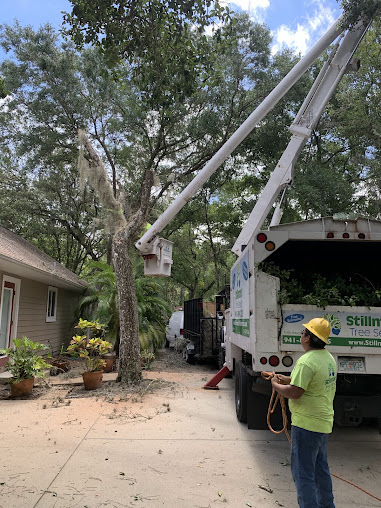
- Equipment requirements: Some tall palms or restricted locations require a lift or other specialized equipment.
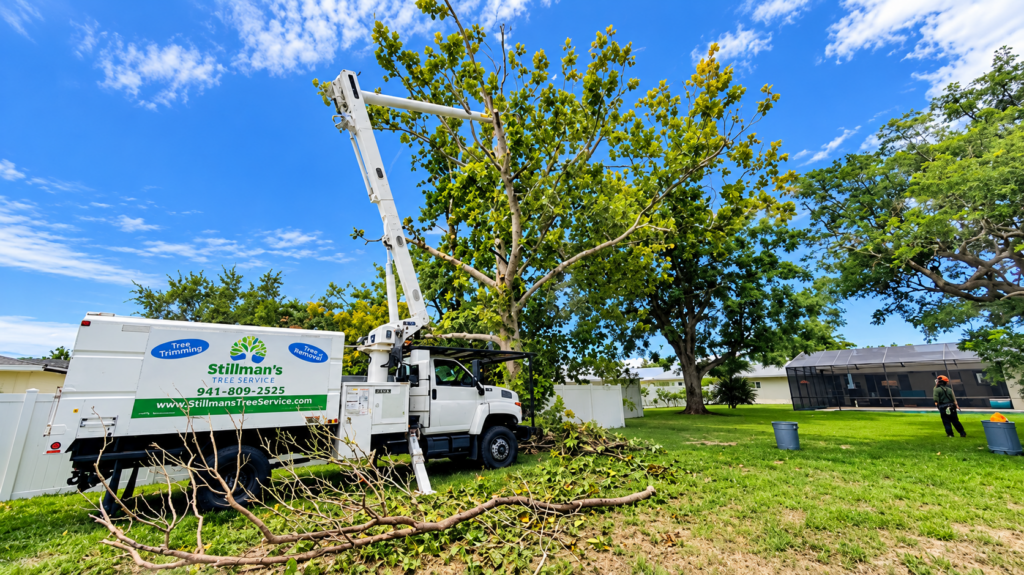
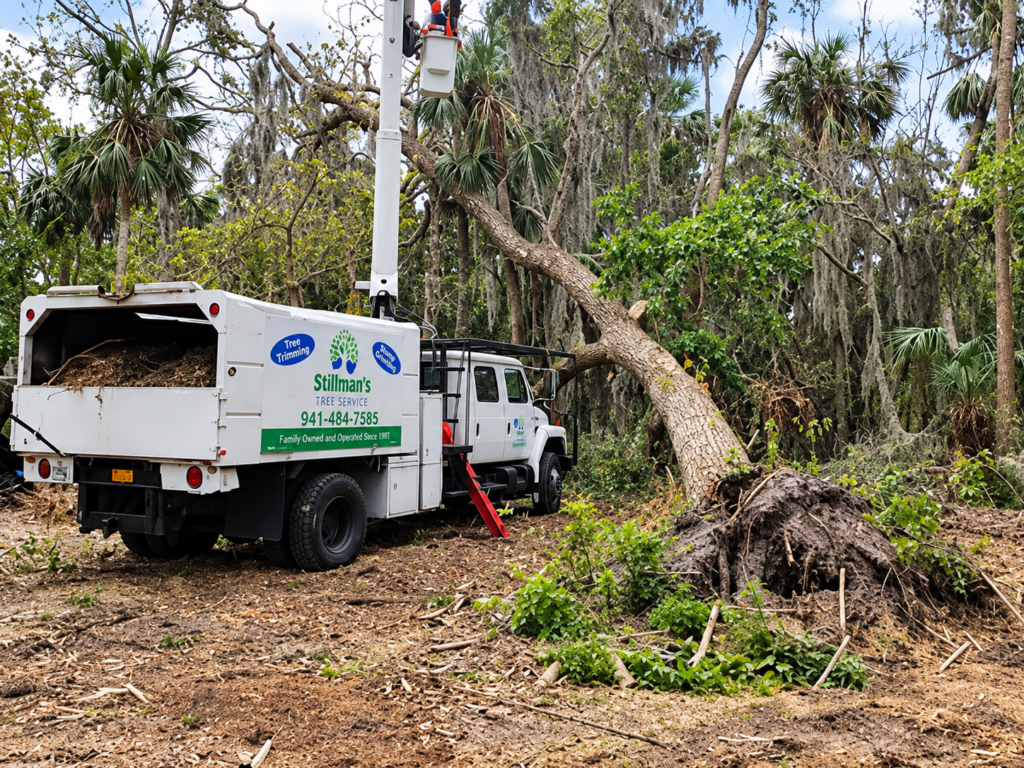
Every property is different. Stillman’s Tree Service provides free estimates after assessing the palms and the work involved. Call us to discuss your trimming needs.
How Often Should Palm Trees Be Trimmed?
Most landscape palms do not need frequent trimming. Some need attention once a year or less, while others naturally shed older fronds and require occasional maintenance.
Consider trimming when:
- Dead or damaged fronds hang over roofs, driveways, walkways, or pool enclosures.
- Fruit or seed stalks create a falling-object hazard or unwanted mess.
- Growth touches structures or obstructs an important sightline.
- Dead fronds need removal for appearance or practical maintenance.
The correct schedule depends on the palm species, health, and location. Avoid automatically scheduling trimming every few months without a specific reason. Removing healthy green fronds can reduce the palm’s ability to produce food.
Why Palm Trees Need Different Pruning
Palms grow differently from hardwood trees. A palm has a growing point near the top of its trunk, where new fronds develop. Damage to this growing point can seriously harm or kill the palm.
Green fronds produce the energy the palm needs to grow and remain healthy. Removing too many healthy leaves reduces that food supply and can leave the palm stressed.
A proper trimming approach focuses on dead, brown fronds and appropriate removal of spent flower or fruit stalks. Healthy green fronds should generally remain unless a qualified professional identifies a specific reason for removal.
Why Over-Trimming Can Damage Palms
A hurricane cut, sometimes called a pencil-point cut, removes most of a palm’s crown until only a few upright fronds remain. This practice does not make palms storm-proof.
Over-trimming can:
- Reduce the palm's ability to produce food.
- Slow growth and weaken the plant.
- Increase stress and contribute to long-term decline.
- Remove foliage that helps the palm maintain normal growth.
Removing hazardous dead growth is different from stripping healthy foliage. For storm preparation, focus on appropriate maintenance rather than aggressive cutting.
Professional climbers should also avoid driving climbing spikes into palm trunks. These wounds do not heal like wounds in typical hardwood trees and can leave permanent damage.
Trimming Needs for Common Florida Palms
Different palm species have different maintenance requirements.
Sabal palms
These hardy palms often need only occasional removal of dead fronds and spent seed stalks.
Queen palms
Annual attention may be appropriate when dead fronds or heavy fruit clusters create maintenance concerns. Yellowing leaves can also indicate nutrient problems.
Coconut palms
Removing mature coconuts can help reduce falling-fruit hazards over walkways, driveways, and seating areas.
Royal and Washingtonia palms
Their height can make access and equipment important cost factors. Some Washingtonia palms retain dead fronds that property owners may choose to remove.
Pindo, foxtail, and date palms
Their needs vary by species, size, and condition. Some have sharp spines or are sensitive to excessive pruning.
If you are unsure which palm grows on your property, an assessment can help determine appropriate maintenance.
When Is Professional Palm Trimming Worthwhile?
Professional trimming may be appropriate when dead fronds hang over occupied areas, fruit clusters create hazards, or palm growth interferes with structures. Removing unwanted dead growth can also improve a property’s appearance.
Trimming tall palms is not a suitable do-it-yourself project for most homeowners. Falling fronds, heavy fruit, sharp spines, electrical lines, and working at height can create serious risks.
Before hiring a company, ask:
- What growth will you remove?
- Do you avoid using climbing spikes on palm trunks?
- Do you clean tools between palms?
- Does the estimate include debris removal and hauling?
- Can you provide proof of insurance?
- Will you inspect the palms before preparing an estimate?
A clear estimate should explain the work involved instead of relying on a generic price or photo.
What Yellow or Brown Palm Fronds Mean
Discolored fronds do not always mean a palm needs trimming. Yellowing, browning, or frizzled leaves can indicate nutrient deficiencies, disease, or other damage.
Florida’s sandy soils can lack nutrients that palms need. Queen palms, for example, may develop visible nutrient-related symptoms. Removing partly green fronds without identifying the cause can remove useful nutrients before the palm has recovered them.
Some diseases, including lethal bronzing and Fusarium wilt, can cause serious decline in susceptible palms. Lightning damage may also affect palm health. If a palm deteriorates unusually quickly, consider a professional assessment rather than relying on trimming alone.
Cleaning tools between palms is another sensible precaution because certain plant diseases can spread through contaminated equipment.
Frequently asked questions
How much does palm tree trimming cost in Bradenton?
The supplied planning range is low-price to high-price per palm. Actual costs depend on height, access, species, fruit removal, equipment, and cleanup.
Do palm trees need annual trimming?
No. Some palms need occasional maintenance, while others naturally shed older fronds. Trim according to the palm’s condition and location rather than following an automatic schedule.
Does trimming help palms survive hurricanes?
Aggressive trimming does not make palms storm-proof. Removing appropriate dead or hazardous growth is different from removing healthy green fronds, which help support normal palm growth.
Should yellow palm fronds be cut off?
Not automatically. Yellowing may indicate a nutrient deficiency or disease. Identify the likely cause before deciding whether the frond should be removed.
Is palm trimming necessary before hurricane season?
Not simply because hurricane season is approaching. Assess dead, damaged, or hazardous growth, but avoid removing healthy foliage just to create a hurricane cut.
Request a Palm Trimming Estimate in Bradenton
Stillman’s Tree Service helps homeowners in Manatee County and north Sarasota County assess palm trimming needs, from dead fronds to hazardous fruit clusters. As a family-owned company with 20 years in business, we also provide tree removal, tree trimming, and stump grinding.