
- Home
- About
- Services
- Resources
- Do You Need a Permit to Remove a Tree in Manatee County
- Do You Need a Permit to Remove a Tree in Sarasota County
- Bradenton City Tree Removal Permits
- Florida Tree Removal Law 163.045
- What Tree Removal Costs in Manatee and Sarasota County
- Palm Tree Trimming Cost in Bradenton, Florida Guide
- Bradenton Hurricane Tree Prep
- Tree Topping in Florida
- Is Your Tree Dangerous? Warning Signs in Bradenton, Florida
- Live Oaks in Manatee County: Protected, Pruned and Misunders
- Florida Palm Tree Care | Sabal, Queen, Coconut and Date
- Storm Damage Tree Removal and Insurance in Bradenton
- Signs of Tree Decline in Florida
- Florida Tree Service Checklist
- Service Areas
Bradenton, FL
Samoset, FL
Palmetto, FL
West Bradenton, FL
Oneco, FL
Bayshore Gardens, FL
Ellenton, FL
Memphis, FL
Whitfield, FL
Palma Sola, FL
Terra Ceia, FL
Longboat Key, FL
Cortez, FL
Rubonia, FL
Bradenton Beach, FL
Holmes Beach, FL
The Meadows, FL
Sarasota, FL
Anna Maria, FL
Parrish, FL
Fruitville, FL
Lakewood Ranch, FL
Sarasota Springs, FL
Bee Ridge, FL
Lake Sarasota, FL
Siesta Key, FL
Gulf Gate Estates, FL
- Contact
Do You Need a Permit to Remove a Tree in Manatee County
It depends on where the tree stands and who regulates the ground. In unincorporated Manatee County, a homeowner needs no permit to remove a tree in a private back or side yard. A county permit is required for HOA common areas, commercial sites and conservation areas. Inside the City of Bradenton, a separate city process applies. Florida law can also bar local permit requirements for a residential tree that is an unacceptable risk.
Your situation, in one list
- Back or side yard, unincorporated Manatee County: the county says you do not need authorization to remove or replace the tree.
- Required street tree in front of your home: no permit to replace it, but the county sets replacement rules.
- HOA common area, commercial site, conservation easement, wetland buffer, landscape buffer or utility easement: a county Tree Removal Permit.
- Tree in the public right of way: a Right of Way Use Permit in addition to the Tree Removal Permit.
- Inside the City of Bradenton: the city’s own permit process under its Land Use Regulations.
- Residential tree that is an unacceptable risk: Florida Statute 163.045 may apply. More on that below.
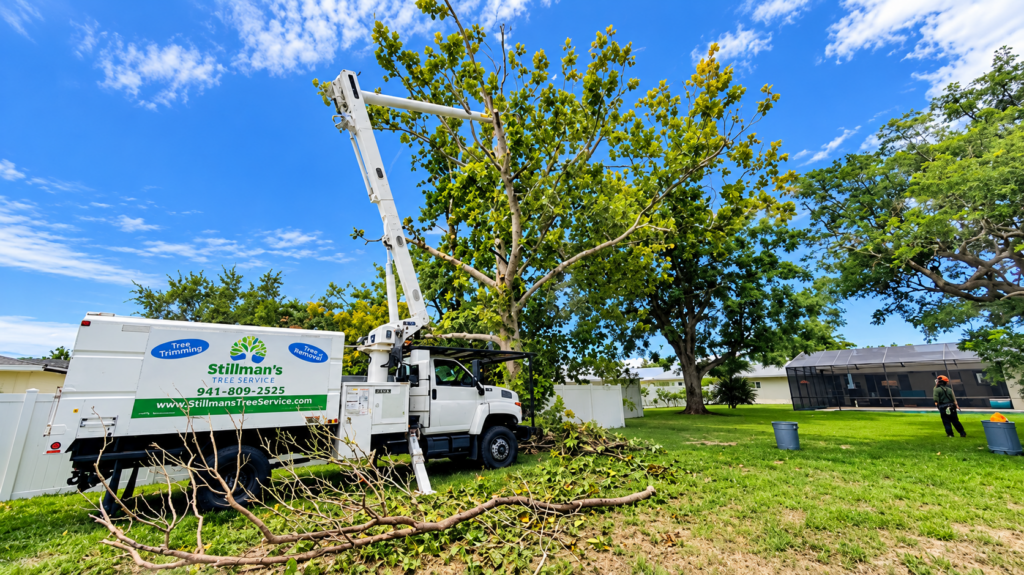
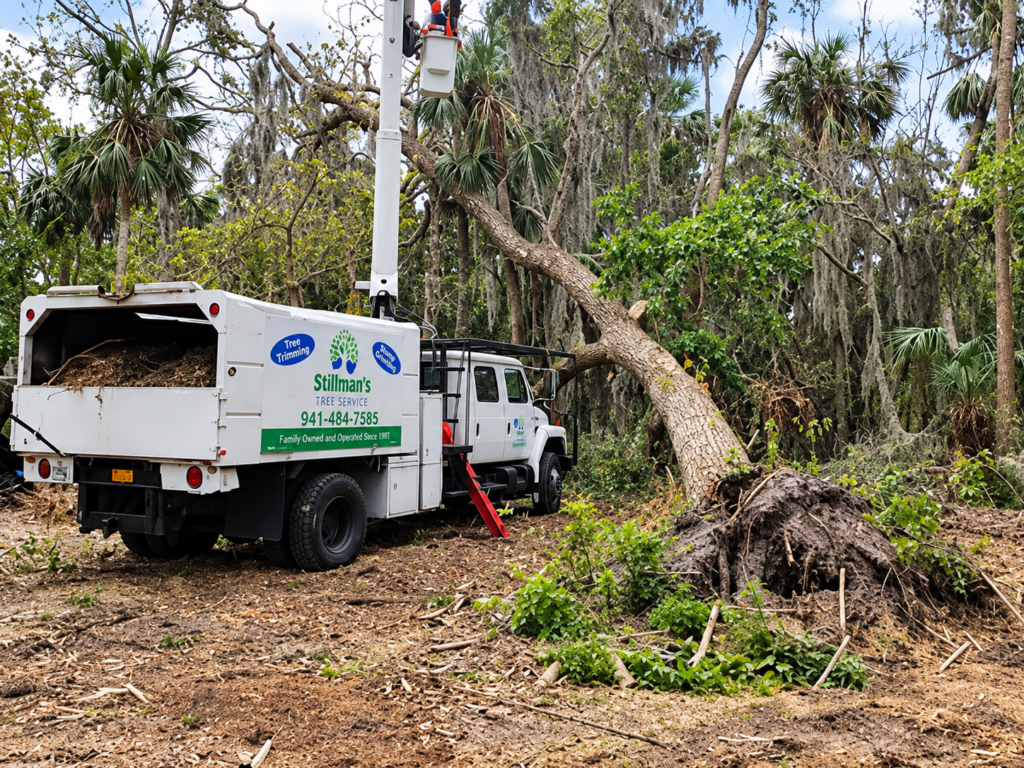
First question: county or city?
Manatee County, the City of Bradenton and Sarasota County each run different rules, and a homeowner three streets over can be under a different government. A Bradenton mailing address does not tell you which one you are under. Confirm your parcel with the city’s Planning and Zoning Department at 941-932-9400 or the county’s Environmental Review office at (941) 748-4501 before you plan anything.
What Manatee County says about residential trees
The county states that you do not need authorization to remove or replace a tree in your private back or side yard. The county only regulates the required residential street tree.
If you remove a required street tree, the county’s replacement rules under the Private Property Rights Protection Act apply:
- Replace it within 30 days.
- Plant the replacement within 25 feet back from the right of way.
- The replacement must be graded Florida #1.
- Existing trees within 25 feet of the right of way may count in place of a new one.
Your HOA may have its own landscape requirements, and the county advises contacting the HOA before you replace a tree.
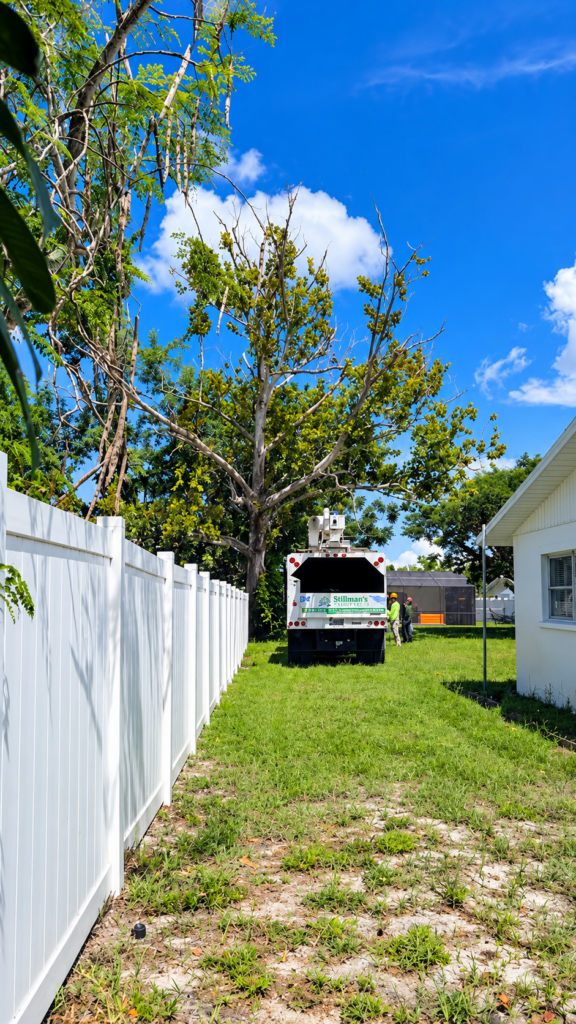
Where homeowners get it wrong, in both directions
Thinking you need a permit when you do not
- Taking down a tree in a private back or side yard in unincorporated Manatee County.
- Replacing a required street tree. The county asks you to follow the replacement rules, not to apply for a permit.
Thinking you do not need one when you do
- The tree sits in an HOA common area, a conservation easement, a wetland buffer, a landscape buffer or a utility easement.
- The tree was part of the original approved landscape plan of an existing development.
- The tree stands in the public right of way. The property is inside the City of Bradenton.
HOA common areas, commercial sites and conservation areas
This is the group the county permits. The Tree Removal Permit (TRP) is filed through the county’s online system, and the county lists the fee at $144.00. The application is the A24 Tree Removal type in the county’s Accela portal.
Two details catch people:
- Stump grinding counts. The county’s instructions treat removal as including grinding the stump to at least 6 inches below grade.
- Replacement or a payment. The county asks for replacement trees or a Tree Protection Trust Fund payment in lieu, listed at $445.00 per 3-inch caliper replacement tree and $585.00 per 4-inch caliper replacement tree.
Nuisance exotic species are generally unprotected and do not need a TRP. The exceptions are exotics that were installed as required landscaping, or a removal covering an acre or more. In those cases a permit is required and the fee is waived.
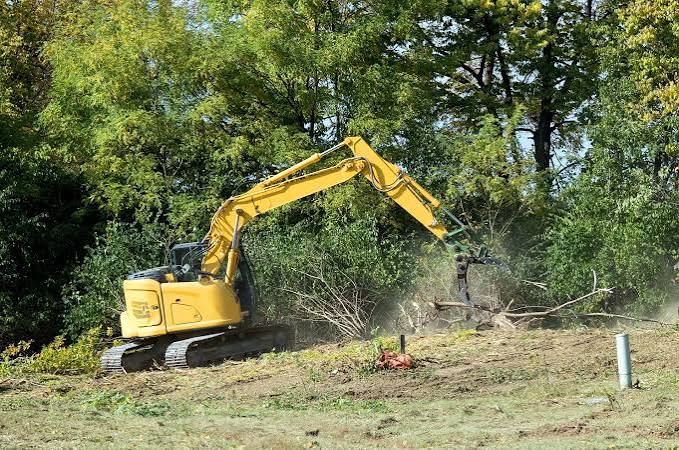
Inside the City of Bradenton
The city runs its own application and its own rules. Section 2.2.3.1 of the Bradenton Land Use Regulations sets removal and replacement requirements, and the city’s permit supplement says trees that are removed must be replaced, or a payment made into the city’s Tree Fund.
What the city’s own documents say:
- Replacement counts depend on the species and size of the tree.
- No application fee is assessed for dead or dying trees, trees damaging infrastructure, or trees a utility company requires to be removed.
- The city’s application lists palms other than sabal palm, fruit trees and invasive exotics as exempt from permitting. Sabal palm, the state tree, is not on that list.
- The supplement has a separate provision for stands of live oak.
- The city warns of fines up to $5,000 for removal without checking whether a permit is needed.
The city’s supplement also reproduces the state statute discussed below.
Florida Statute 163.045: when the tree is an unacceptable risk
This is the rule that surprises people most. Section 163.045 says a local government may not require a notice, application, approval, permit, fee or mitigation for pruning, trimming or removing a tree on residential property when the owner has documentation that the tree poses an unacceptable risk to persons or property. It also bars the local government from requiring you to replant.
The terms are specific:
Residential property
means a single-family, detached building on a lot actively used for single-family residential purposes.
Documentation
means an onsite assessment following ISA’s Best Management Practices - Tree Risk Assessment, Second Edition (2017), performed and signed by an ISA Certified Arborist or a Florida licensed landscape architect.
Unacceptable risk
means removal is the only practical way to bring the tree’s risk below moderate.
That last test is a real one. A tree with codominant stems and included bark may be held together with cabling instead of coming down. A tree with decay fungi at the base, a lifting root plate or lightning damage may be a different case. The judgment is made on the tree, not on how much you want it gone.
What Stillman’s can do
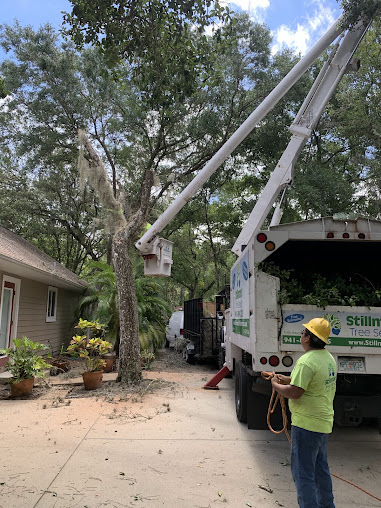
Stillman’s has an ISA Certified Arborist on staff. Stillman’s can sign the documentation a homeowner needs where a tree qualifies, and the estimate costs nothing.
The honest limits
- It applies to residential property only, as the statute defines it.
- The tree has to genuinely qualify. It is not a way around every permit for every tree.
- It does not apply to specifically delegated mangrove protection.
- The statute is written about local governments. Check your HOA documents separately.
After a storm: what insurance questions to ask
We are not giving coverage advice. The questions to settle are whether the tree fell or only leaned, whether it hit a structure, whether it was your tree or a neighbor’s, and whether your policy covers removal and at what deductible. Your carrier decides those. Call them and ask.
A note on doing it yourself
Permit or no permit, felling and rigging a tree is among the most dangerous work around a house. Drop zones, tension in the wood and the weight of the limbs are hard to judge from the ground. We explain what the work involved here is, not how to do it, and we leave the climbing and cutting to a trained crew.
Sarasota County and the other towns
This page does not cover Sarasota County, the City of Sarasota, Palmetto or the island towns. Each is its own government with its own tree rules, so check with the one that holds your parcel.
Frequently asked questions
Do I need a permit to remove a tree in my backyard in unincorporated Manatee County?
The county says no authorization is needed for a private back or side yard. Easements, buffers, HOA rules and city limits can change that, so confirm your parcel first.
Do I need a permit to remove a dead tree?
In an unincorporated private back or side yard, the county does not require authorization. In the City of Bradenton, the supplement waives the application fee for dead or dying trees, so confirm with Planning and Zoning at 941-932-9400 whether the application is still required.
Do palm trees need a permit?
The City of Bradenton’s application lists palms other than sabal palm as exempt from permitting. Sabal palm, the state tree, is not exempt there. In an unincorporated private back or side yard, the county requires no authorization.
What happens if I remove a tree without a required permit?
The City of Bradenton warns of fines up to $5,000. Manatee County takes reports of illegal removal through Code Enforcement.
Can my HOA stop me?
The county requires a permit for HOA common areas. Your HOA may also have landscape rules of its own, and the county advises contacting your HOA before replacing a tree.
Your next step
Not sure which rules apply to your tree, or whether 163.045 fits? Call Stillman’s Tree Service at 941-803-1309. The estimate is free.