- Home
- About
- Services
- Resources
- Do You Need a Permit to Remove a Tree in Manatee County
- Do You Need a Permit to Remove a Tree in Sarasota County
- Bradenton City Tree Removal Permits
- Florida Tree Removal Law 163.045
- What Tree Removal Costs in Manatee and Sarasota County
- Palm Tree Trimming Cost in Bradenton, Florida Guide
- Bradenton Hurricane Tree Prep
- Tree Topping in Florida
- Is Your Tree Dangerous? Warning Signs in Bradenton, Florida
- Live Oaks in Manatee County: Protected, Pruned and Misunders
- Florida Palm Tree Care | Sabal, Queen, Coconut and Date
- Storm Damage Tree Removal and Insurance in Bradenton
- Signs of Tree Decline in Florida
- Florida Tree Service Checklist
- Service Areas
Bradenton, FL
Samoset, FL
Palmetto, FL
West Bradenton, FL
Oneco, FL
Bayshore Gardens, FL
Ellenton, FL
Memphis, FL
Whitfield, FL
Palma Sola, FL
Terra Ceia, FL
Longboat Key, FL
Cortez, FL
Rubonia, FL
Bradenton Beach, FL
Holmes Beach, FL
The Meadows, FL
Sarasota, FL
Anna Maria, FL
Parrish, FL
Fruitville, FL
Lakewood Ranch, FL
Sarasota Springs, FL
Bee Ridge, FL
Lake Sarasota, FL
Siesta Key, FL
Gulf Gate Estates, FL
- Contact
Do You Need a Permit to Remove a Tree in Sarasota County
Often yes, but it depends on which government holds your address. Sarasota County requires a tree permit for removal in the unincorporated area and in the City of Venice, with exemptions, and no permit for routine trimming. The City of Sarasota and the City of North Port run their own rules, as does Longboat Key. Florida law can also bar local permit requirements for a residential tree that is an unacceptable risk.
Your situation, in one list
- Unincorporated Sarasota County or the City of Venice: a county Tree Permit for removal or relocation, unless an exemption applies.
- City of Sarasota: a city permit for any tree over 4.5 inches in diameter, dead trees included. Dead trees carry no fee.
- City of North Port: a permit for trees 24 inches or larger. Smaller trees on an owner-occupied home may not need one after the first year with a Certificate of Occupancy. Confirm with the city.
- Town of Longboat Key: the town’s own Building Division sets the rules.
- Mangroves, anywhere in the county: a separate mangrove permit process. A tree permit does not cover them.
- Residential tree that is an unacceptable risk: Florida Statute 163.045 may apply. More on that below.
First question: which government holds your address?
A Sarasota mailing address does not tell you. Venice permits through the county, while the City of Sarasota, North Port and Longboat Key each have their own offices. If your property is north of the county line, the rules are different again, and our Manatee County permit page covers that side. Confirm your parcel before you plan anything. The county’s Environmental Specialists answer at 941-861-5000.
Unincorporated Sarasota County and the City of Venice
The county’s Trees Code, Chapter 54, Article XVIII, requires a permit for tree removal or relocation. The county serves unincorporated Sarasota County and the City of Venice for tree permitting. It also requires a permit for pruning or causing irreparable injury to trees in a Canopy Road Protection Zone or the right of way.
A permit is only issued when the applicant shows one of the county’s listed conditions. The ones homeowners reach for most often:
- The tree is a safety hazard to people, buildings, structures, vehicles or other improvements.
- The tree is diseased or weakened by age, storm, fire or other injury to the point that it has lost most of its function and value or poses a danger, as determined by the county.
- The tree completely prevents access to a lot.
The Trees Code has exemptions, including exotic species. The county strongly recommends contacting an Environmental Specialist before removing any native tree with a trunk diameter over four inches, or any palm with a clear trunk over eight feet.
Trimming is different
The county does not require a permit to trim trees on private property, except inside a Canopy Road Protection Zone or the right of way. The county counts about 24 miles of designated canopy road in the unincorporated area.
Grand Trees get extra protection
New development is designed to avoid impacts to them, and the county asks owners to call before touching one. Live oak is the signature tree here, so it is worth asking.
Replacement is real
Replacement trees must be Florida #1, at least eight feet tall with a two-inch trunk diameter. The owner replaces any that die within seven years of planting. No more than 25 percent of a replant may be cabbage palm or wax myrtle.
Mangroves are their own process
Sarasota County received delegation from the state in 2016 to administer local mangrove trimming and alteration permits. Many trimming activities require a permit, and a Professional Mangrove Trimmer is required for permitted work. Call 941-861-5000 before you touch one. Inside the City of Sarasota, the city cannot issue a tree permit for red, black or white mangrove without a valid state DEP mangrove permit.
Inside the City of Sarasota
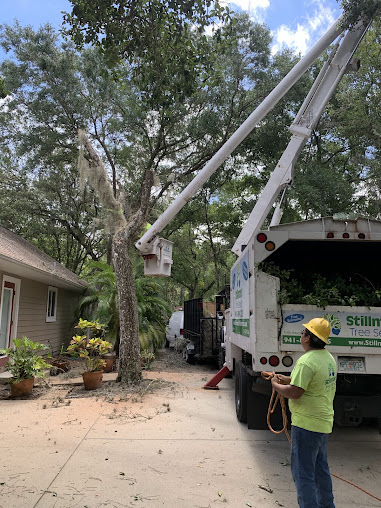
The city says a permit is required to remove or relocate any tree greater than four and one-half inches in diameter at breast height. That includes dead, prohibited and undesirable species. There is no fee for those, but the permit is still required before work starts.
What the city’s page says about the process:
- Applications can be submitted online, or in person at 1575 2nd Street, Development Services.
- Trees on the application must be marked with an orange ribbon within 24 hours. A failed inspection for unmarked trees carries a $100 re-inspection fee.
- Once the permit is issued, a protected copy must be posted at the site until the work is done. After removal, you schedule an inspection.
- Routine trimming and pruning needs no permit, but the city strongly recommends a certified arborist for large branches and any work on Grand Trees.
- In the city, a Grand Tree is a live oak or sand live oak of 24 inches or more at breast height, or a slash pine, longleaf pine or southern red cedar of 20 inches or more.
Inside the City of North Port
North Port adopted new tree regulations in 2022. Its published FAQ says any tree with a diameter at breast height of 24 inches or more needs a permit to remove. It also says a homeowner does not need a permit if they have held their Certificate of Occupancy for more than 12 months and the tree is under 24 inches.
The city’s current page says removal authorization is filed through a Certificate of Zoning Compliance application, with a tree location survey, and review takes about 10 business days. The city’s regulations summary lists a penalty of up to $5,000 per tree for doing work that requires a permit without one. Because the city’s documents describe the process differently, call Natural Resources at 941-429-7000 before you cut.
Florida Statute 163.045: when the tree is an unacceptable risk
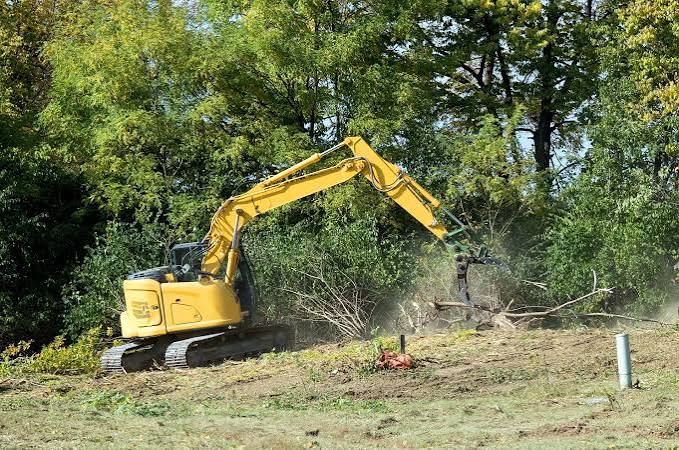
This is the rule most homeowners have never heard of. Section 163.045 says a local government may not require a notice, application, approval, permit, fee or mitigation for pruning, trimming or removing a tree on residential property when the owner has documentation that the tree poses an unacceptable risk to persons or property. It also bars the local government from requiring you to replant.
The terms are specific:
Residential property
means a single-family, detached building on a lot actively used for single-family residential purposes.
Documentation
means an onsite assessment following ISA’s Best Management Practices - Tree Risk Assessment, Second Edition (2017), performed and signed by an ISA Certified Arborist or a Florida licensed landscape architect.
Unacceptable risk
means removal is the only practical way to bring the tree’s risk below moderate.
That last test is real. A tree with codominant stems and included bark may be held together with cabling instead of coming down. A tree with decay fungi at the base, a lifting root plate in sandy soil, or lightning damage may be a different case. A dead tree is not automatically an unacceptable risk either. The assessment decides it, not the tree’s status.
What Stillman’s can do
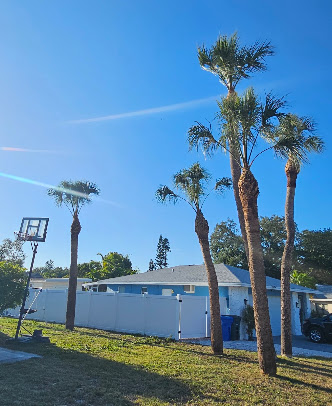
Stillman’s has an ISA Certified Arborist on staff. Stillman’s can sign the documentation a homeowner needs where a tree qualifies, and the estimate costs nothing.
The honest limits
- It applies to residential property only, as the statute defines it.
- The tree has to genuinely qualify. It is not a way around every permit for every tree.
- It does not apply to specifically delegated mangrove protection. Sarasota County holds that delegation, so mangroves stay under the county’s process.
- The statute is written about local governments. Check your HOA documents separately.
After a storm: what insurance questions to ask
We are not giving coverage advice. The questions to settle are whether the tree fell or only leaned, whether it hit a structure, whether it was your tree or a neighbor’s, and whether your policy covers removal and at what deductible. Your carrier decides those. Call them and ask.
A note on doing it yourself
Permit or no permit, felling and rigging a tree is among the most dangerous work around a house. Drop zones, tension in the wood and the weight of the limbs are hard to judge from the ground. We explain what the work involved here is, not how to do it, and we leave the climbing and cutting to a trained crew.
Longboat Key and the other towns
The county points Longboat Key residents to the Town of Longboat Key Building Division for tree permitting. This page does not cover the town’s rules. Island and coastal properties also deal with salt exposure and, on the barrier islands, coastal rules, so check with the government that holds your parcel before any removal.
Frequently asked questions
Do I need a permit to remove a tree in unincorporated Sarasota County?
Usually. The county requires a permit for removal or relocation, with exemptions such as exotic species. Call 941-861-5000 before removing a native tree over four inches or a palm with a clear trunk over eight feet.
Do I need a permit to trim a tree in Sarasota County?
Not for private property in general. A permit is required inside a Canopy Road Protection Zone or the right of way. The City of Sarasota also requires none for routine trimming.
Do I need a permit to remove a dead tree in the City of Sarasota?
Yes. The city requires a permit for any tree over 4.5 inches in diameter, dead trees included. There is no fee for dead trees.
Do I need a permit in North Port?
The city’s FAQ says trees 24 inches or larger need a permit, and owner-occupied homes after 12 months with a Certificate of Occupancy do not need one for smaller trees. Confirm with Natural Resources at 941-429-7000.
Do mangroves need a permit?
Yes. In Sarasota County the county administers mangrove permits, and a Professional Mangrove Trimmer is required for permitted work. In the City of Sarasota, a state DEP mangrove permit comes first.
Your next step
Not sure which rules apply to your tree, or whether 163.045 fits? Call Stillman’s Tree Service at 941-803-1309. The estimate is free.