- Home
- About
- Services
- Resources
- Do You Need a Permit to Remove a Tree in Manatee County
- Do You Need a Permit to Remove a Tree in Sarasota County
- Bradenton City Tree Removal Permits
- Florida Tree Removal Law 163.045
- What Tree Removal Costs in Manatee and Sarasota County
- Palm Tree Trimming Cost in Bradenton, Florida Guide
- Bradenton Hurricane Tree Prep
- Tree Topping in Florida
- Is Your Tree Dangerous? Warning Signs in Bradenton, Florida
- Live Oaks in Manatee County: Protected, Pruned and Misunders
- Florida Palm Tree Care | Sabal, Queen, Coconut and Date
- Storm Damage Tree Removal and Insurance in Bradenton
- Signs of Tree Decline in Florida
- Florida Tree Service Checklist
- Service Areas
Bradenton, FL
Samoset, FL
Palmetto, FL
West Bradenton, FL
Oneco, FL
Bayshore Gardens, FL
Ellenton, FL
Memphis, FL
Whitfield, FL
Palma Sola, FL
Terra Ceia, FL
Longboat Key, FL
Cortez, FL
Rubonia, FL
Bradenton Beach, FL
Holmes Beach, FL
The Meadows, FL
Sarasota, FL
Anna Maria, FL
Parrish, FL
Fruitville, FL
Lakewood Ranch, FL
Sarasota Springs, FL
Bee Ridge, FL
Lake Sarasota, FL
Siesta Key, FL
Gulf Gate Estates, FL
- Contact
Tree Removal Permits Inside Bradenton City Limits
If your property is inside Bradenton city limits, you may need a tree removal permit before removing a protected tree. The City of Bradenton has its own tree regulations, application requirements, and replacement rules. These differ from Manatee County requirements.
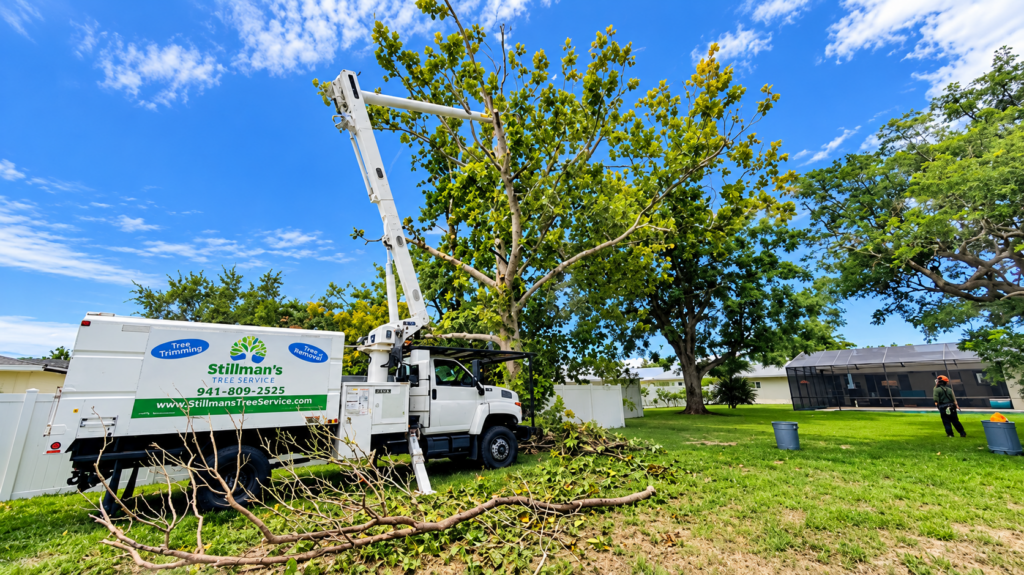
Stillman’s Tree Service helps property owners understand their tree care options, assess potential tree risks, and determine what documentation may be needed. Before scheduling tree removal, confirm which rules apply to your property.
Do You Need a Tree Removal Permit in Bradenton?
Permit requirements depend on your property’s location, the tree species, and the reason for removal.
- Protected trees: A city tree removal permit is generally required for protected trees, such as live oaks and laurel oaks.
- Certain exempt trees: The city's application lists palms other than sabal palm, fruit trees, and invasive exotic trees as exempt from permitting.
- Dead or dying trees: The city waives the application fee for certain qualifying trees, but you should confirm whether a permit is still required.
- Trees posing an unacceptable risk: Florida Statute 163.045 may provide an exception for qualifying trees on residential property when the required professional documentation is available.
- Properties outside city limits: Different county rules may apply.
Removing a tree without a required permit can result in fines of up to $5,000, according to the City of Bradenton. Excessive pruning can also result in penalties.
How to Check Whether Your Property Is in Bradenton City Limits
A Bradenton mailing address does not guarantee that your property is within city limits. Some properties fall under unincorporated Manatee County, where different tree removal rules apply.
Before removing a tree, contact Bradenton Planning and Zoning at 941-932-9400 to confirm your property’s jurisdiction and permit requirements. Checking first can help prevent delays and potential permit violations.
Bradenton Tree Removal Rules and Replacement Requirements
The City of Bradenton regulates tree removal under Section 2.2.3.1 of its Land Use Regulations. Tree classifications are based on diameter at breast height (DBH), measured 4.5 feet above the ground.
- Non-significant trees: 4 to 7.99 inches DBH.
- Significant trees: 8 to 30 inches DBH.
- Grand trees: 30.01 inches DBH and larger.
Live oak and laurel oak trees have specific replacement requirements. Removing a grand tree may require ten replacement trees under the city’s supplement.
Approved removals may require replacement planting or payment into the city’s Tree Fund. Requirements vary by tree species and size, so contact Bradenton Planning and Zoning at 941-932-9400 to confirm the rules for your property.
Which Trees Are Exempt From City Permitting?
According to the City’s Tree Removal Permit application, the following categories are exempt from permitting:
- Palms other than sabal palm.
- Fruit trees.
- Invasive exotic trees.
Sabal palm is not included in the city’s palm exemption list, so do not assume it is exempt.
Even when a tree does not require a permit, removal or pruning may still involve safety concerns. Palms need appropriate care because their growth differs from that of broadleaf trees. Excessive pruning, including stripping away too many healthy fronds, can weaken a palm rather than protect it.
Before starting work, verify the applicable requirements and choose an appropriate approach for the tree’s condition.
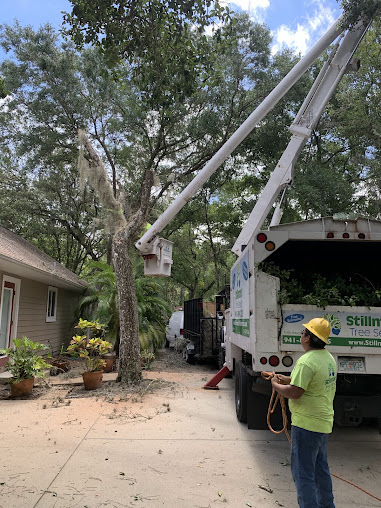
When Does Bradenton Waive the Tree Removal Application Fee?
The city’s supplement identifies certain situations in which the application fee is waived. These include dead or dying trees, trees damaging infrastructure, and trees that a utility company requires to be removed.
However, a waived application fee does not automatically mean a permit is unnecessary. Contact Planning and Zoning to confirm whether an application, permit, or replacement planting is still required.
When requesting an assessment, explain the tree’s condition and any visible concerns. Examples include a dead crown, a split between major stems, decay fungi near the base, or damage following a lightning strike.
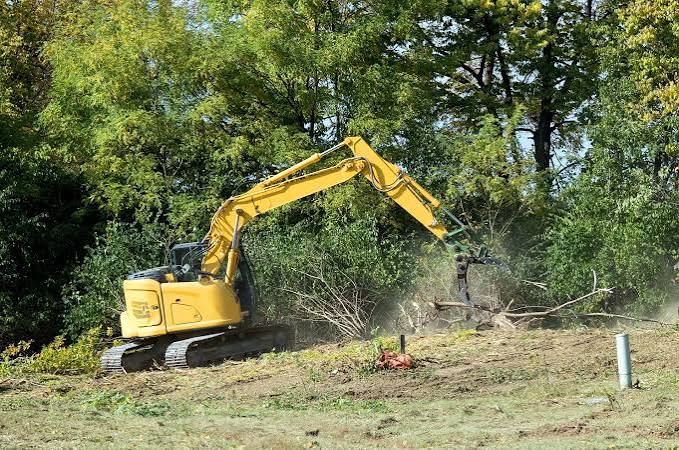
Florida Statute 163.045: Trees That Pose an Unacceptable Risk
Florida Statute 163.045 may exempt qualifying residential trees from certain local tree removal requirements when the owner has proper documentation showing an unacceptable risk to people or property.
To qualify, the property must be used for single-family residential purposes, and an onsite assessment must be completed and signed by an ISA Certified Arborist or Florida-licensed landscape architect. Removal must be the only practical way to reduce the tree’s risk below moderate.
Stillman’s Tree Service has an ISA Certified Arborist on staff who can provide the required documentation when the tree qualifies. The statute has limitations, including mangrove protections, and separate HOA rules may apply. Contact Stillman’s for a free estimate.
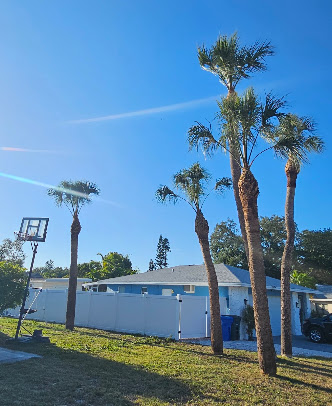
Tree Removal After a Storm: What Should You Do?
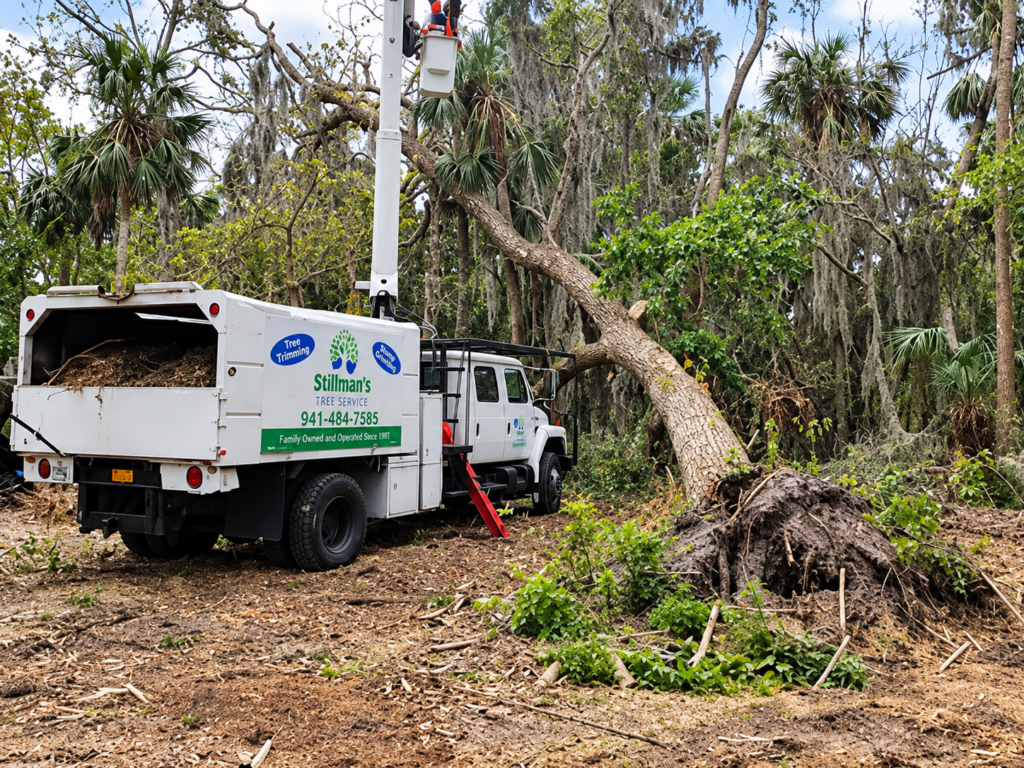
Storm damage can raise questions about tree safety, insurance, and local requirements. If a tree has fallen, is leaning, or has sustained visible damage, contact the appropriate professionals to assess the situation. Ask your insurance carrier whether your policy covers tree removal, what deductible applies, and what documentation is needed. Coverage depends on your policy and circumstances. If a tree is on or near a power line, stay clear and contact the utility company. For storm-damaged trees within Bradenton city limits, contact Planning and Zoning at 941-932-9400 to ask about the city's applicable process.
What Information Is Needed for a Tree Removal Permit?
The City of Bradenton’s application asks for basic property and tree information, including:
Property address.
Tree species or type.
Reason for removal.
Whether you plan to replant or pay into the Tree Fund.
Tree removal connected with site development may require a tree survey showing the size, species, and location of the trees.
Fees and review times may vary. Contact Planning and Zoning for current information before submitting your application.
Frequently asked questions
Do I need a permit to remove a tree in Bradenton, FL?
A permit is generally required for protected trees inside city limits. Certain palms, fruit trees, and invasive exotic trees are listed as exempt. Call 941-932-9400 to confirm your requirements.
Can I remove a dead tree without a permit?
The city waives the application fee for qualifying dead or dying trees. Confirm whether a permit is still required before proceeding.
Are palm trees exempt from Bradenton tree permits?
Palms other than sabal palm are listed as exempt on the city’s application. Sabal palm is not included in that exemption.
What is the fine for removing a tree without a permit?
The City of Bradenton warns that removing a tree without a required permit can result in fines of up to $5,000.
Can I remove a tree that poses a safety risk?
Florida Statute 163.045 may apply to qualifying residential properties when the required professional assessment documents an unacceptable risk. Not every hazardous-looking tree qualifies.
Does my HOA have separate tree removal rules?
Your HOA may have its own landscape requirements. Review your HOA documents because the state statute addresses local government requirements and does not automatically remove separate HOA obligations.
Contact Stillman's Tree Service for a Tree Assessment
Unsure whether your tree needs a permit, replacement planting, or a professional risk assessment? Stillman’s Tree Service can help you understand your options and evaluate the tree’s condition.
Call 941-803-1309 to request your free estimate and discuss your tree removal needs in Bradenton, Florida.