- Home
- About
- Services
- Resources
- Do You Need a Permit to Remove a Tree in Manatee County
- Do You Need a Permit to Remove a Tree in Sarasota County
- Bradenton City Tree Removal Permits
- Florida Tree Removal Law 163.045
- What Tree Removal Costs in Manatee and Sarasota County
- Palm Tree Trimming Cost in Bradenton, Florida Guide
- Bradenton Hurricane Tree Prep
- Tree Topping in Florida
- Is Your Tree Dangerous? Warning Signs in Bradenton, Florida
- Live Oaks in Manatee County: Protected, Pruned and Misunders
- Florida Palm Tree Care | Sabal, Queen, Coconut and Date
- Storm Damage Tree Removal and Insurance in Bradenton
- Signs of Tree Decline in Florida
- Florida Tree Service Checklist
- Service Areas
Bradenton, FL
Samoset, FL
Palmetto, FL
West Bradenton, FL
Oneco, FL
Bayshore Gardens, FL
Ellenton, FL
Memphis, FL
Whitfield, FL
Palma Sola, FL
Terra Ceia, FL
Longboat Key, FL
Cortez, FL
Rubonia, FL
Bradenton Beach, FL
Holmes Beach, FL
The Meadows, FL
Sarasota, FL
Anna Maria, FL
Parrish, FL
Fruitville, FL
Lakewood Ranch, FL
Sarasota Springs, FL
Bee Ridge, FL
Lake Sarasota, FL
Siesta Key, FL
Gulf Gate Estates, FL
- Contact
Florida Statute 163.045: Tree Removal Laws in Bradenton, FL
Florida Statute 163.045 explains when certain residential trees can be pruned, trimmed, or removed without local government permits or fees. However, not every tree qualifies. Property requirements and professional documentation must be considered before work begins.
For homeowners in Bradenton and Manatee County, understanding this law can help clarify whether a tree needs a professional assessment. Stillman’s Tree Service can inspect your tree and explain the next steps.
What Does Florida Statute 163.045 Say?
Florida Statute 163.045 limits local government requirements for qualifying tree work on certain residential properties. When the statutory conditions are met and the owner has the required documentation, a local government generally cannot require a notice, application, approval, permit, fee, or mitigation covered by the statute. It also restricts replanting requirements for qualifying work.
The tree must pose an unacceptable risk to people or property. Documentation must come from an ISA Certified Arborist or a Florida-licensed landscape architect and follow the assessment procedures specified in the law.
The statute includes an exception involving mangroves where a local government has specifically delegated authority.
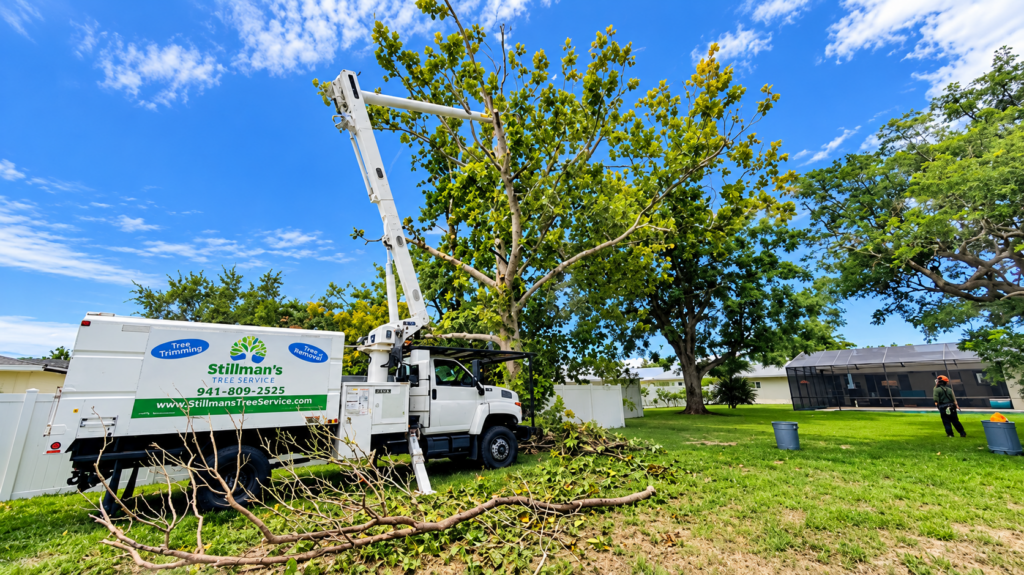
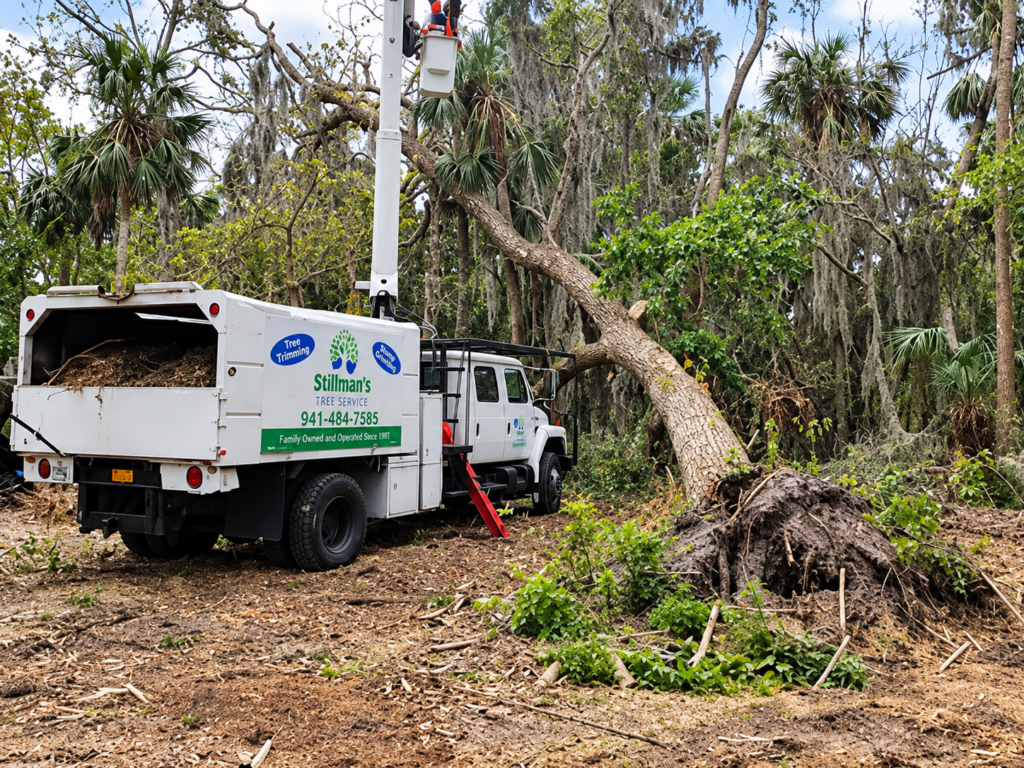
Which Properties Qualify?
The statute defines qualifying residential property as a lot with a single-family detached building actively used for single-family residential purposes, including certain legally recognized nonconforming uses.
Commercial properties, HOA common areas, and conservation areas do not automatically qualify for this exemption. Manatee County identifies these locations as subject to applicable tree removal permit requirements.
If you own a townhouse, duplex, condominium, or property with special restrictions, confirm the applicable rules with your local authority before assuming the exemption applies.
What Is an Unacceptable Tree Risk?
A damaged tree does not automatically qualify for removal under Florida Statute 163.045. A tree risk assessment considers the likelihood of failure, the chance that a falling tree or branch will hit a person or property, and the potential consequences.
Under the statute, a tree poses an unacceptable risk when removal is the only practical way to reduce its risk below moderate.
Depending on the tree’s condition, alternatives may include removing dead branches, appropriate crown reduction, cabling a weak union, or moving a target away from the tree. If another practical measure can reduce the risk sufficiently, removal may not meet the statutory test.
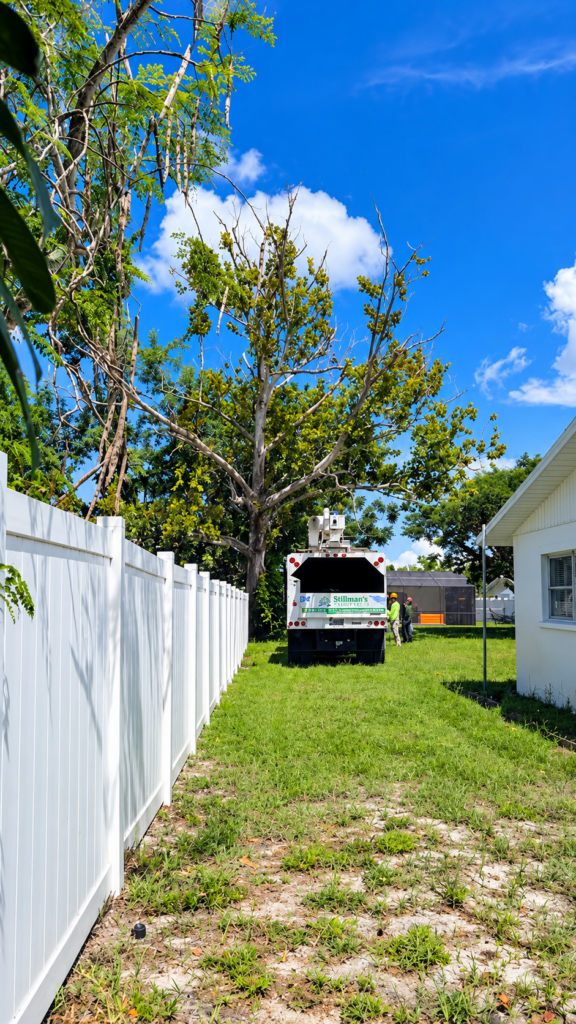
Who Can Provide the Required Documentation?
The statute identifies two qualified professionals:
- An ISA Certified Arborist.
- A Florida-licensed landscape architect.
The assessment must take place onsite, follow the specified ISA tree risk assessment procedures, and be signed by the qualified professional.
A photograph, informal opinion, or removal estimate alone does not replace the required documentation. Ask who will assess the tree and sign the report.
Stillman’s Tree Service has an ISA Certified Arborist on staff. Our team can assess your tree and explain whether the statute may apply to your situation.
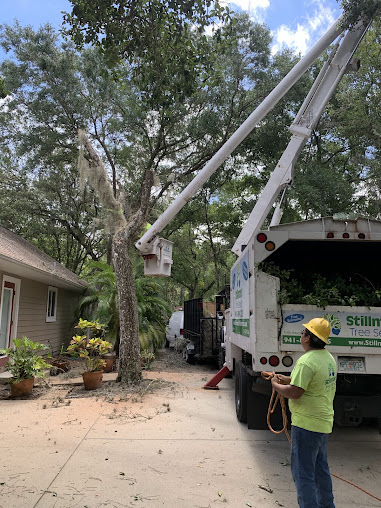
Tree Problems That May Need Assessment
Trees in Bradenton and Southwest Florida can develop structural problems after storms, lightning strikes, or prolonged decline. These warning signs deserve professional attention, but none automatically qualifies a tree for removal under the statute.
Weak branch unions
Large stems growing closely together with included bark may create a weak point, especially near a home.
Trunk or root decay
Fungal growth, including conks or brackets, can indicate internal decay that needs further evaluation.
Root movement
Raised soil around the roots or a new lean after strong winds may indicate instability.
Lightning damage
A tree may develop structural problems or decline after a lightning strike.
Storm damage
Cracked trunks, split unions, and hanging branches can indicate damage requiring prompt assessment.
A tree’s species or height alone does not determine whether it is dangerous. Its condition and the people or property it could affect must be considered.
What Does the Law Not Cover?
Florida Statute 163.045 does not provide automatic permission to remove every tree. It does not cover every property type, and an inconvenient tree or one blocking a planned pool does not automatically meet the unacceptable-risk test.
Homeowners should also consider HOA covenants and other applicable restrictions. The statute addresses local government requirements and does not eliminate the need to review private property rules.
Trees in public rights-of-way may have separate requirements. Manatee County identifies circumstances in which a right-of-way use permit is required. Check with the relevant authority before arranging removal.
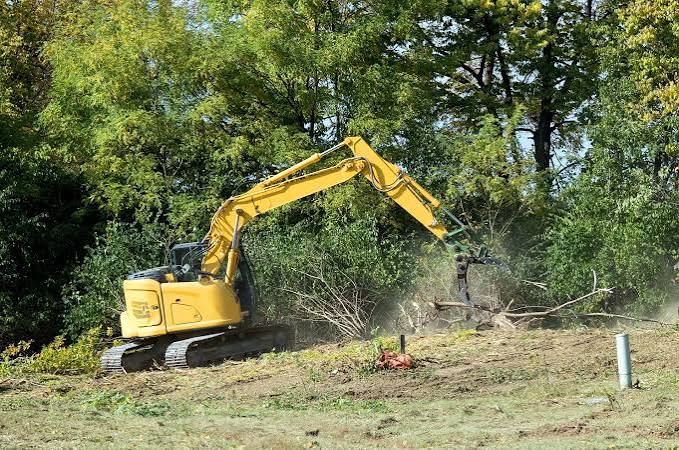
Manatee County vs. City of Bradenton Tree Rules
Your property’s jurisdiction determines which local procedures you should check.
Manatee County
The county identifies permit requirements for trees in HOA common areas, commercial properties, and conservation areas. Its guidance also addresses required residential street trees and distinguishes them from trees in the side or rear yards of single-family properties.
City of Bradenton
The city administers its own application process. Contact the city to confirm the requirements for your property.
North Sarasota County
Sarasota County and its municipalities have separate tree regulations. Verify the rules for your specific address before beginning work.
What About Storm Damage and Insurance?
After a storm, local tree regulations and insurance coverage are separate considerations. First, determine whether the tree qualifies under Florida Statute 163.045 or whether other requirements apply.
Next, contact your insurance carrier when possible before clearing debris. Ask whether your policy covers removal, whether a deductible applies, and whether photographs or an inspection are required before cleanup.
Coverage depends on your policy and circumstances. Your insurance provider can explain the applicable terms.
Frequently asked questions
Do I need a permit to remove a tree in Bradenton, Florida?
It depends on your property, the tree’s condition, and the applicable regulations. Florida Statute 163.045 may exempt qualifying residential tree work when the required professional documentation is available. Check local requirements before proceeding.
Who can sign a tree risk assessment?
The statute identifies an ISA Certified Arborist or a Florida-licensed landscape architect. The assessment must be performed onsite, follow the specified procedures, and be signed by the qualified professional.
Does Florida Statute 163.045 cover pruning and trimming?
Yes. The statute addresses pruning, trimming, and removal when its conditions are met.
Can I remove a tree because it is damaging my driveway or blocking a pool?
Not automatically. The tree must meet the statutory unacceptable-risk test. If another practical measure can reduce the risk below moderate, removal may not qualify under this provision.
Does the law apply to HOA common areas or commercial properties?
The residential exemption is limited by the statute’s property definition. HOA common areas and commercial properties do not automatically qualify. Contact the relevant local authority to confirm applicable requirements.
Contact Stillman's Tree Service for a Tree Assessment
Concerned about a leaning tree, damaged trunk, weak branch union, or storm-related tree damage? Stillman’s Tree Service can assess the tree and explain whether Florida Statute 163.045 may apply to your situation.
Call 941-803-1309 to discuss your tree and arrange a free estimate.
Stillman’s Tree Service is a family-owned, owner-operated company based at 2509 9th St W, Bradenton, FL 34205. The company is licensed and insured, with general liability and workers’ compensation certificates available upon request.