- Home
- About
- Services
- Resources
- Do You Need a Permit to Remove a Tree in Manatee County
- Do You Need a Permit to Remove a Tree in Sarasota County
- Bradenton City Tree Removal Permits
- Florida Tree Removal Law 163.045
- What Tree Removal Costs in Manatee and Sarasota County
- Palm Tree Trimming Cost in Bradenton, Florida Guide
- Bradenton Hurricane Tree Prep
- Tree Topping in Florida
- Is Your Tree Dangerous? Warning Signs in Bradenton, Florida
- Live Oaks in Manatee County: Protected, Pruned and Misunders
- Florida Palm Tree Care | Sabal, Queen, Coconut and Date
- Storm Damage Tree Removal and Insurance in Bradenton
- Signs of Tree Decline in Florida
- Florida Tree Service Checklist
- Service Areas
Bradenton, FL
Samoset, FL
Palmetto, FL
West Bradenton, FL
Oneco, FL
Bayshore Gardens, FL
Ellenton, FL
Memphis, FL
Whitfield, FL
Palma Sola, FL
Terra Ceia, FL
Longboat Key, FL
Cortez, FL
Rubonia, FL
Bradenton Beach, FL
Holmes Beach, FL
The Meadows, FL
Sarasota, FL
Anna Maria, FL
Parrish, FL
Fruitville, FL
Lakewood Ranch, FL
Sarasota Springs, FL
Bee Ridge, FL
Lake Sarasota, FL
Siesta Key, FL
Gulf Gate Estates, FL
- Contact
Hat-Racking and Topping: Why It Is Banned and What to Do Instead
Hat-racking and tree topping are severe pruning practices that remove large portions of a tree’s canopy, often leaving blunt stubs and unnatural growth. They can increase decay risk, encourage poorly attached shoots, and weaken the tree’s structure. Some Florida local ordinances restrict or prohibit these practices in specific settings. Before approving major cuts, understand the rules that apply to your property and consider proper pruning or removal instead.
What Are Hat-Racking and Tree Topping?
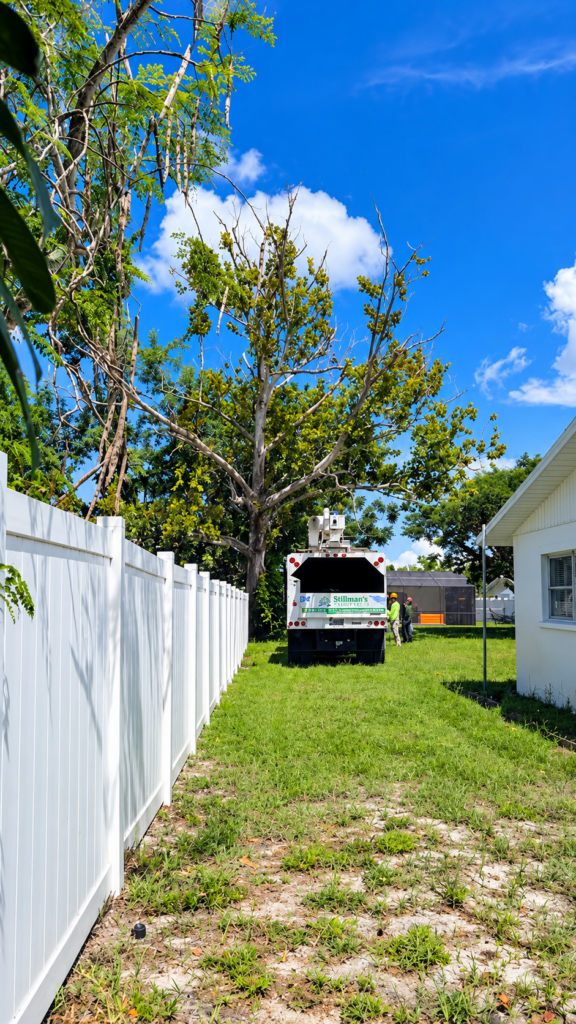
Tree topping removes large sections of the upper canopy, cutting branches back to stubs or branches too small to support the remaining growth. Hat-racking describes severe pruning that leaves a tree looking like a collection of bare poles.
These practices differ from selective pruning, which removes chosen branches while preserving the tree’s natural structure.
A contractor might recommend topping because a tree shades the house, extends over the roof, or has grown beyond its available space. However, removing most of the canopy does not necessarily solve the underlying problem and may create further maintenance needs.
Why Can Topping Damage a Tree?
Large cuts can encourage decay
Trees respond to injuries by compartmentalizing damaged tissue rather than healing like human skin. Large cuts can exceed the tree’s ability to limit decay effectively.
Regrowth may have weak attachments
Topped trees often produce fast-growing shoots near the cuts. These shoots may attach less securely than naturally developed branches and can become vulnerable to breaking as they grow.
The tree loses its natural structure
Removing much of the canopy changes the tree’s balance and exposes previously shaded branches and bark to more sunlight. In Southwest Florida, these effects matter because trees face intense sun, heavy rainfall, and seasonal hurricane conditions.
Is Hat-Racking Illegal in Florida?
Florida does not have one blanket prohibition covering every instance of tree topping on every property. Local ordinances and property circumstances determine which restrictions apply.
- Manatee County: Section 701.12 of the Manatee County Land Development Code restricts hat-racking or lollipopping canopy trees in required landscaping without the specified approval.
- City of Bradenton: The city maintains its own code and land-use requirements. Rules within city limits may differ from county requirements.
A Bradenton mailing address does not automatically mean the property is inside city limits. Confirm the property’s jurisdiction and check the applicable rules before authorizing major pruning.
What Should You Do Instead of Topping?
Selective pruning
Selective pruning removes specific branches to address clearance, damaged growth, or structural concerns while retaining the tree's natural form. ANSI A300 pruning standards provide guidance for appropriate tree care.
Crown reduction
Crown reduction shortens selected branches to suitable lateral branches that can support continued growth. Unlike topping, it aims to preserve a more natural canopy. The tree's species, condition, and existing defects determine whether reduction is appropriate.
Evaluate structural problems
Codominant stems occur when two main stems compete for dominance. Included bark develops when bark becomes trapped between adjoining stems, potentially weakening their connection. These conditions do not automatically require removal, but they may affect the available options.
Consider removal
If a tree has extensive decay, serious structural defects, or has outgrown its location, removal may be more suitable than repeated severe pruning. The decision depends on the tree's condition, location, local rules, and the practical options for retaining it.
Why Does Southwest Florida's Climate Matter?
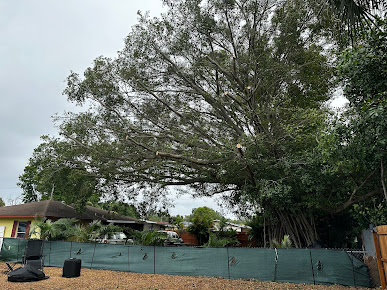
Live oaks are common around Bradenton and can develop broad, heavy canopies. Some live oaks are subject to local protection requirements, so check the applicable rules before authorizing work.
Hurricane season runs from June through November. Topping is not a reliable way to storm-proof a tree. The resulting regrowth can introduce additional structural concerns.
Palms also require a different approach from broadleaf trees because their growth patterns differ. Appropriate maintenance depends on the palm species and its condition, not simply on how much foliage can be removed.
What Should You Ask Before Hiring a Tree Service?
Before approving major pruning, ask why the cuts are needed, whether selective pruning or crown reduction could address the problem, and whether local restrictions apply. Ask the contractor to explain the likely effects on the tree’s structure and future maintenance.
Be cautious if topping is recommended without a clear explanation of the tree’s condition or the alternatives. A low initial quote may not account for future maintenance or eventual removal.
Frequently asked questions
Is tree topping illegal in Florida?
Not in every situation. Restrictions depend on the applicable local ordinance, property type, and circumstances. Manatee County restricts hat-racking of canopy trees in required landscaping unless the specified approval is obtained.
Can a topped tree grow back?
Yes. Many trees produce new shoots after topping, but regrowth does not restore the original branch structure. Some shoots may have weak attachments, and large cuts can increase decay risk.
Can I top a live oak in Bradenton?
Do not assume topping is permitted simply because the tree is on private property. Local protection rules may apply. Check with the relevant local government before authorizing the work.
What is the difference between topping and crown reduction?
Topping removes large portions of the canopy, often leaving stubs. Crown reduction selectively shortens suitable branches to appropriate lateral branches while retaining more of the tree’s natural structure.
What if a contractor recommends topping my tree?
Ask why the work is necessary and whether selective pruning, crown reduction, or removal would better address the concern. Confirm local requirements before the work begins.
Get a Free Tree Trimming Estimate
Stillman’s Tree Service is a family-owned, owner-operated tree company based in Bradenton, serving Manatee County and north Sarasota County for 20 years. Services include tree trimming, tree removal, and storm damage work.
Call 941-803-1309 to request a free estimate and discuss the appropriate work for your property.