- Home
- About
- Services
- Resources
- Do You Need a Permit to Remove a Tree in Manatee County
- Do You Need a Permit to Remove a Tree in Sarasota County
- Bradenton City Tree Removal Permits
- Florida Tree Removal Law 163.045
- What Tree Removal Costs in Manatee and Sarasota County
- Palm Tree Trimming Cost in Bradenton, Florida Guide
- Bradenton Hurricane Tree Prep
- Tree Topping in Florida
- Is Your Tree Dangerous? Warning Signs in Bradenton, Florida
- Live Oaks in Manatee County: Protected, Pruned and Misunders
- Florida Palm Tree Care | Sabal, Queen, Coconut and Date
- Storm Damage Tree Removal and Insurance in Bradenton
- Signs of Tree Decline in Florida
- Florida Tree Service Checklist
- Service Areas
Bradenton, FL
Samoset, FL
Palmetto, FL
West Bradenton, FL
Oneco, FL
Bayshore Gardens, FL
Ellenton, FL
Memphis, FL
Whitfield, FL
Palma Sola, FL
Terra Ceia, FL
Longboat Key, FL
Cortez, FL
Rubonia, FL
Bradenton Beach, FL
Holmes Beach, FL
The Meadows, FL
Sarasota, FL
Anna Maria, FL
Parrish, FL
Fruitville, FL
Lakewood Ranch, FL
Sarasota Springs, FL
Bee Ridge, FL
Lake Sarasota, FL
Siesta Key, FL
Gulf Gate Estates, FL
- Contact
Live Oaks in Manatee County: Protected, Pruned and Misunderstood
Live oaks are a defining tree across Manatee County, but their size, spreading branches and long lives can create questions about pruning, damage and removal. Whether a live oak is protected depends on your property, its location and the rules that apply there. Before removing or heavily pruning one, check the relevant local requirements and understand whether the tree can be maintained safely.
Why Live Oaks Matter in Manatee County
Southern live oak (Quercus virginiana) is well suited to Florida’s climate. Its broad canopy provides shade, while its spreading limbs and extensive root system can occupy a large part of a yard. Mature trees can become long-term features of residential streets and properties.
That size also means a live oak needs room. Branches may extend over a roof, driveway or neighbouring property. Roots can interact with paving and other structures, particularly where space is limited. These conditions do not automatically mean a tree needs to be removed.
A live oak’s condition matters as much as its size. A large tree can remain serviceable with appropriate maintenance, while a smaller tree with major structural defects may need attention.
Are Live Oaks Protected in Manatee County?
There is no single answer for every property. Tree rules can differ depending on whether your property is in unincorporated Manatee County, within the City of Bradenton, or under another local jurisdiction. Property type and location also matter.
The Manatee County Land Development Code, Chapter 7 outlines county tree-protection requirements and exemptions. County guidance states that permits are required for tree removal in certain HOA common areas, commercial properties and conservation areas. Private residential side and rear yards are treated differently, subject to applicable exceptions and restrictions.
Do not assume that a tree is unrestricted simply because it stands in your yard. Greenbelt buffers, conservation areas, common ownership and other property conditions may affect what is allowed. Confirm the rules for your specific address before arranging removal.
What If Your Property Is Inside Bradenton City Limits?
A Bradenton mailing address does not necessarily mean your property falls within the city. If it does, City of Bradenton requirements may apply instead of the county’s rules.
The city provides a separate tree removal permit supplement and application information through its Planning and Zoning Forms and Instructions. Check the current requirements before removing a live oak.
When Does a Live Oak Need Pruning?
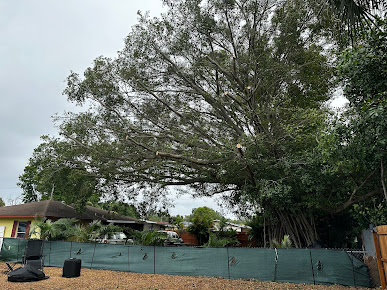
Live oaks often develop wide canopies and heavy lateral limbs. Pruning may be appropriate when dead branches, crossing limbs, clearance issues or structural concerns need attention. The goal is to address the specific problem while retaining the tree’s natural form.
Crown reduction means selectively shortening suitable branches to reduce canopy spread or height. It is different from topping, which cuts major limbs back indiscriminately and can leave large wounds and poorly attached regrowth.
Proper pruning considers branch structure, the tree’s condition and the amount of live canopy being removed. Heavy pruning is not automatically safer, and cutting away large portions of a healthy tree can create unnecessary stress.
Source: Manatee County Land Development Code, Chapter 7, Section 700. Checked October 13, 2026.
Signs a Live Oak May Have a Structural Problem
A live oak can look healthy from a distance and still have a defect that deserves attention. Warning signs include:
Cracks or splits
A crack where major stems meet may indicate a weak connection.
Root plate movement
Raised soil or movement around the base can suggest that the tree is losing stability.
Dead or declining branches
Significant deadwood or a thinning canopy may indicate stress, disease or damage.
Decay or fungal growth
Mushrooms or conks near the trunk or roots can be associated with decay, although appearance alone cannot establish how much wood is affected.
A changing lean
A new lean, especially with disturbed soil, warrants prompt attention.
One sign does not automatically mean removal is necessary. The location of the defect, the tree’s overall condition and what lies within reach if a branch or the tree fails all matter.
Stay clear of hanging limbs, fresh splits and trees showing movement at the base. Do not climb or attempt to cut hazardous branches yourself. If a tree or branch contacts a power line, keep away and contact the utility.
Does Florida Law Allow Removal of a Dangerous Live Oak Without a Permit?
Florida Statute 163.045 creates a specific exception for qualifying trees on certain residential properties. When the required documentation establishes that a tree poses an unacceptable risk, the local government cannot require a notice, application, approval, permit, fee or mitigation for the covered work. It also cannot require replanting for work performed under the statute.
The law defines residential property narrowly: it generally means a detached, single-family home on a lot actively used for single-family residential purposes. Documentation must come from an onsite assessment following Best Management Practices: Tree Risk Assessment, Second Edition (2017) and be signed by an ISA Certified Arborist or Florida-licensed landscape architect. Removal must be the only practical way to reduce the risk below moderate.
Should You Prune or Remove a Live Oak?
The decision depends on the tree’s condition and surroundings. Selective pruning may address limited branch problems. Significant decay, root instability or major structural failure may make removal necessary.
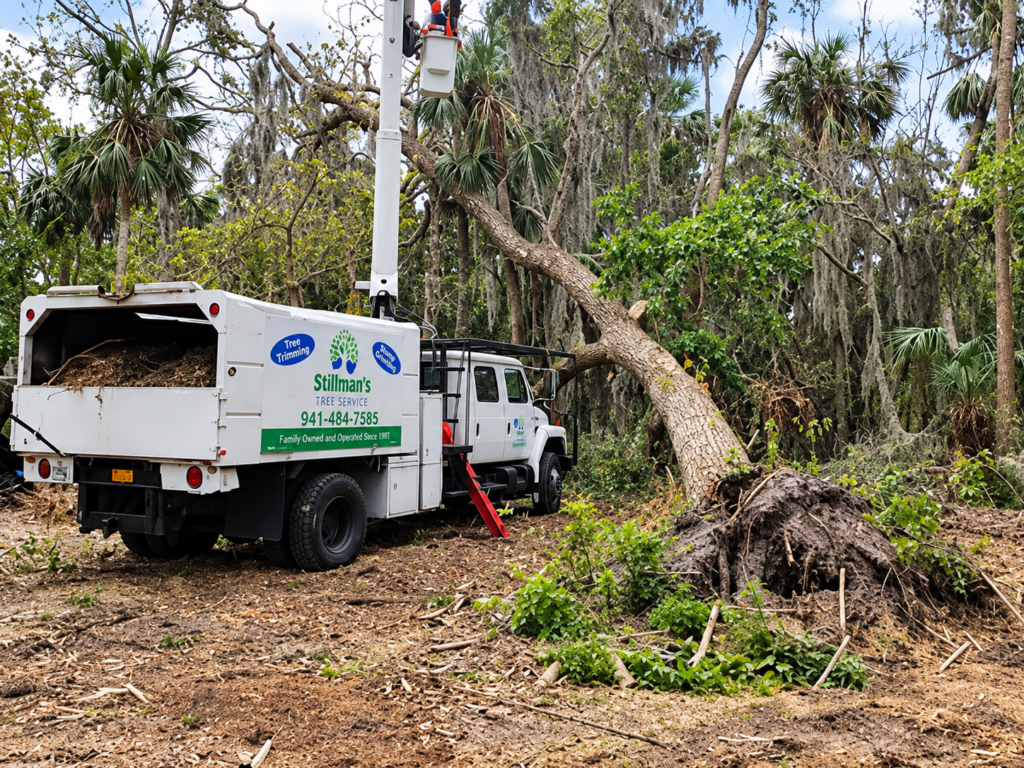
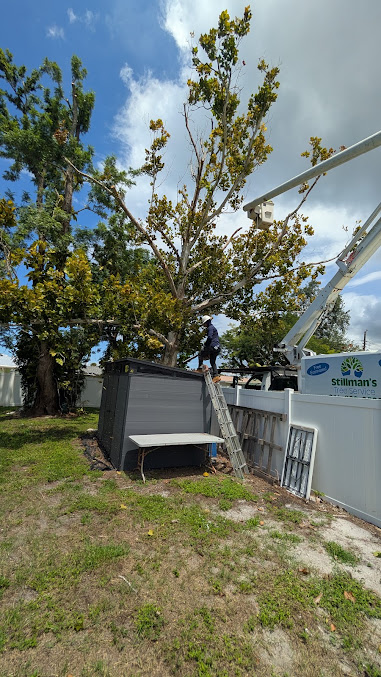
A mature live oak can extend over roofs, fences and driveways, so removal needs careful planning. Crane-assisted removal may be suitable for some sites, depending on access and the tree’s position.
If storm damage occurs, contact your insurance carrier to ask what documentation is needed before work begins. Do not assume removal costs will be covered.
FAQ
Are all live oaks protected in Manatee County?
Not under one universal rule. Requirements depend on the property’s location, type and any applicable local restrictions. Check the county or city rules before arranging tree work.
Can I trim a live oak without a permit?
Routine maintenance and regulated tree work are not always treated the same way. The rules may depend on your jurisdiction, property type and whether the work changes the tree substantially. Confirm the requirements for your address first.
Does Florida Statute 163.045 apply to every dangerous tree?
No. It applies to qualifying trees on narrowly defined residential property when the required assessment documents an unacceptable risk. It does not remove every local requirement for every property.
Can a damaged live oak be saved?
Sometimes. The answer depends on the extent of the damage, decay, root stability and branch structure. Appropriate pruning may help in some cases, while severe structural problems may make removal necessary.
What should I do if a live oak is damaged in a storm?
Keep away from split trunks, hanging limbs and disturbed root areas. Do not attempt to cut or move hazardous tree parts yourself. Contact the utility if the tree touches a power line, and arrange professional help once the area is safe.
Request a Free Live Oak Estimate
If your live oak has damaged limbs, structural concerns or branches interfering with your property, call Stillman’s Tree Service at 941-803-1309 for a free estimate.
Serving Bradenton, Manatee County and north Sarasota County.